
Zepbound/Mounjaro & Ozempic/Wegovy, Mounjaro :Complete 2026 Guide to Medical Weight Loss
The GLP-1 medications, including Ozempic/Wegovy, Mounjaro, and Zepbound, are potent for weight loss. While they act on similar systems in the human body and share the peptide GLP-1, they are not the same drugs Continue reading to discover the differences between these drugs as they relate to losing weight, improving cardiovascular status, reducing sleep apnea and inflammation and reversing liver and kidney disease. A remarkable effect on human metabolic processes.
Are Mounjaro and Ozempic in the Same Drug Class?
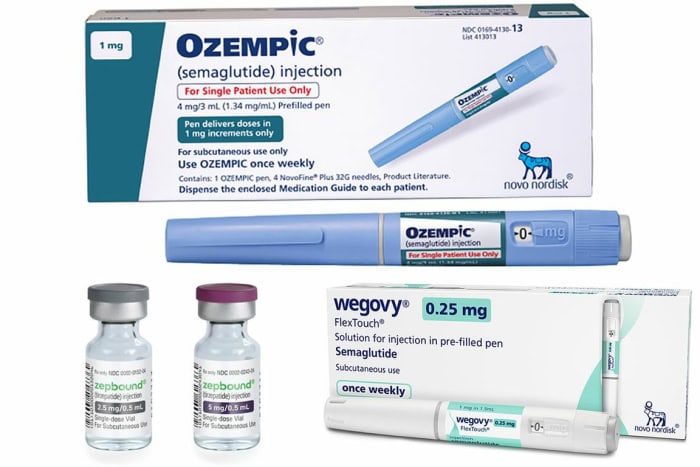
GLP-1 medications including injections for rapid, safe weight loss
Both Zepbound/Mounjaro and Ozempic are in the class of drugs referred to as incretin mimetics. A mimetic is a substance that mimics or copies the actions of another substance. When we ingest nutrients, our digestive system releases incretins into our bloodstream. There are 2 primary incretin hormones – GIP and GLP-1. GIP binds to the GIP receptor, and GLP-1 binds to the GLP-1 receptor. These are called receptor agonists. GIP and GLP-1 stimulate insulin secretion. Incretin mimetics lower blood glucose levels by mimicking the action of natural incretin hormones. Incretins are also vital to the treatment of obesity by regulating glucose homeostasis and maintaining energy balance. Zepbound is the newly FDA-approved version of the tirzepatide, Mounjaro, and they are exactly the same.
Both drugs treat diabetes and are highly effective. They can both help to reduce the incidence of major cardiovascular events, help regulate blood sugar levels, and help you lose weight.
Is Zepbound/Mounjaro More Effective than Ozempic/Wegovy?
Yes, Zepbound/Mounjaro provides greater weight-loss results than Ozempic. Zepbound is the most potent weight reduction agent approved by the FDA; in head-to-head trials, participants lost 25% of their starting weight.
Zepbound/Mounjaro are the first and only dual GIP/GLP-1 receptor agonists that control both insulin and glucagon secretion. GIP stands for glucose-dependent insulinotropic polypeptide. GLP-1 is glucagon-like peptide-1. In addition, the GIP hormone controls lipids and fat deposition in the body.
What’s the difference between Ozempic/Wegovy and Zepbound/Mounjaro?
How Does Ozempic/Wegovy Work?
Ozempic works by mimicking incretin and stabilizing insulin secretion. This, in turn, helps blood glucose enter the cells to facilitate energy production. The active ingredient semaglutide also contributes to glycemic control by restricting glucagon release and gluconeogenesis (production of blood sugars in the liver). Ozempic is a glucagon-like peptide-1 agonist and mimics the process of incretin GLP-1.
How Do the Tirzepatides Zepbound/Mounjaro Work?
The Tirzepatides, manufactured by Eli Lilly, are GLP-1 receptor agonists and glucose-dependent insulinotropic polypeptide receptor agonists. It works by modulating both insulin and glucagon. Since insulin controls the amount of blood sugar entering cells and glucagon increases blood sugar, they are dual-acting. Increasing energy production makes Mounjaro one of the most valuable diabetes and weight-loss medications. In addition to blood sugar control, it delays gastric emptying which leads to decreased appetite. Also, the GIP hormone has a direct influence on fats and lipids which would positively impact body weight.
To understand the importance of including both GLP-1 and GIP in a weight-loss medication, it’s helpful to review the hormones’ functions. Both hormones are insulinotropic, but they play distinct roles in various tissues and organs, including bone, brain, fat cells, and the pancreas.
In the brain, both are involved in appetite control. Incretins seem to be less physiologically active in obese individuals, even those who are not diabetic. GLP-1 reduces appetite and slows gastric emptying. It may also be beneficial in fat metabolism. As with most biological systems, balance is the key to optimum functioning.
What Is Ozempic FDA Approved For?
Ozempic is FDA-approved to help regulate glucose levels in adults with type 2 diabetes. It is also used to ameliorate the increased risk of cardiovascular events in adults with type 2 diabetes. It must be prescribed by a healthcare provider. When it first came out more than seven years ago, there was great interest in using it for weight loss. However, with newer Tirzepatide and GLP-1, Ozempic has now been delegated to diabetes treatment.
What Is Wegovy Approved For?
Wegovy has received FDA approval for type 2 diabetes and has been approved for weight loss. A healthcare provider must prescribe it. Wegovy can be used for diabetes but primarily now for weight loss.
What are Zepbound and Mounjaro Approved For?
Mounjaro received FDA approval as a medication to treat type 2 diabetes several years ago, Zepbound, the exact same drug with a differnet name was approved in November 2023 for weight loss. They are classified as GIP and GLP-1 receptor agonists.
Which is More Effective for Weight Loss Zepbound/Mounjaro or Ozempic and Wegovy
“Though Mounjaro and Ozempic are both effective weight loss drugs, Mounjaro and Zepbound have been shown in head-to-head trials to be more effective. The most recent SURMOUNT-1 clinical trials included 2,539 participants, with an average starting body weight of 231 pounds. The study duration exceeded 72 weeks.
At the lowest dose of Mounjaro, 5 mg, participants lost 15% of their body weight. At higher doses, 10 mg and 15 mg, participants lost 25% of their body weight. The average weight reduction was 52 lbs. Participants in the placebo group were only able to reduce body weight by 1.3%.
When considering these medications, it is important to assess the effects that weight-loss drugs have on the digestive tract. Gastrointestinal side effects are slightly lower with Mounjaro/zepbound than other medications. It is easier for obese patients to control food intake, maintain compliance, and achieve weight loss goals when they do not have the added stress of feeling ill.
Mounjaro/Zepbound helps people lose weight through the following mechanisms:
- Directly reduces appetite and increases metabolism by action in the brain.
- Reduces glucagon secretion which decreases hunger.
- Causes individuals to eat less carbs and fatty food.
- Increases insulin production, but only when blood sugar is high. That makes the risk of low blood sugar minimal.
- Decreases the liver’s production of sugar and increases the uptake of blood glucose by muscle tissue. This, in turn, will improve glycemic control.
- Slows down the speed at which the stomach empties food into the intestine. Feeling satiated for a longer period will help those with a weight related condition.
How long does it take to start losing weight on Zepbound/Mounjaro?
You can start losing weight on these medications in the first week, but more commonly, it takes two to three weeks to see weight loss in most GLP-1s. The medication’s action that leads to weight loss begins shortly after the first injection. Some of our patients achieve noticeable weight loss after just 2-3 weeks, with gains increasing near the 6-week mark. Patients often sustain substantial weight reductions at 28 weeks. This depends on adherence to a standard dosing schedule, proper diet, and adequate energy expenditure. However, patients’ weight-loss results depend on starting weight, recent weight-loss programs, age, race, gender, and various health conditions, including medications.
How much body weight will I lose on Zepbound or Mounjaro?
The average loss in body weight in Mounjaro/zepbound drug trials was 28 lbs., or 25%. Our patients have experienced similar results. A higher dose may produce more significant weight loss but I’ve seen significant weight loss with doses as low as 2.5 mg a week. Weight loss is very individual. It depends not only on the conditions given above and also on some unknown individual characteristics
How long does it take to start losing weight on all 4 GLP-1’s
You can start losing weight on in 1-2 weeks. On average, patients report noticeable weight loss after 3-4 weeks, with further loss at 6-8 weeks. With faster weight loss on Mounjaro and Zepbound versus Ozempic and Wegovy
How much weight will I lose on Ozempic/Wegovy ?
Clinical trials show you can lose 15-20% of your body weight on Ozempic. Many patients report losing an average of 10% of their starting weight after only 8 weeks.[
Zepbounnd/Mounjaro vs Ozempic Cost
Ozempic & Wegovy Cost
Wegovy is FDA approved for weight loss. However, insurance coverage varies. Some insurance company determinations depend on your starting weight, your endocrine system condition, or whether you have high blood pressure or are at risk for heart disease. The average monthly retail price for Wegovy is $ 1,100. Marked reductions are available with coupons at Novo’s Pharmacy in Orlando and online. New prices can range from $149 to $350 for Wegovy GO, available as oral pills and injections.
Zepboun/Mounjaro Cost from New Lilly Direct for online cash customers
Zepbound, was first listed for more than $1,000 when it was released several years ago just approved for weight loss will be listed at about $1000/month. Mounjaro retails for approximately $1200 per month. Eli Lilly does have some coupons available.
A year after release, the prices have fallen dramatically. With a coupon, which is not hard to get, you can buy the Mounjaro and Zepbound injectable pens for approximately $500 a month. Interesting, all the doses cost the same. Currently, you can buy Zepbound vials from Lilly Direct. For approximately $450 a month. Recently. We introduced a multi-dose pen similar to the Ozempic pen at even a slightly lower cost. We have sent hundreds of patients to Lilly Direct to buy the vials, and almost 100% have been pleased with the service and product.
Are the doses of Zepbound/Mounjaro and Ozempic the same?
The doses of Mounjaro and Ozempic are not the same. Zepbound and Mounjaro dosing ranges from 2.5mg to 15mg, while Ozempic dosing ranges from 0.25mg to 2.4mg.
Zepbound/Mounjaro Dosage–Microdosing.
To reduce the risk of severe allergic reactions or serious side effects, the starting dose is 2.5 mg. A dose is taken once weekly. Doses are increased each week as follows: 5 mg, 7.5 mg, 10 mg, 12.5 mg, and 15 mg. The maximum recommended dose is 15 mg. The weekly subcutaneous injection can be given in the upper arm, thigh, or stomach. Injection sites should be rotated each week. People have taken lower doses to avoid side effects, a practice called microdosing, and have had great success. Dr. Lipman has over 400 patients taking microdoses, with starting doses of 1.25 mg or less for Mounjaro and Zepbound. For these doses, the vials from Lilly Direct are the easiest and most accurate to use.
Ozempic dosage
Ozempic treatment begins with a dosage of 0.25mg per week for 4 weeks. Just as with other drugs, the dosage schedule for Mounjaro and Ozempic can vary according to the needs of each patient. All patients taking GLP-1 drugs need to be monitored by a medical professional who will analyze their current medical condition and their family history. The injections follow a weekly dosing schedule as they are gradually increased to the maximum dose of 2.4mg .
What are the side effects of GLP-1 medications, including Zepbound/Mounjaro, Ozempic/Wegovy?
Side effects of Zepbound and Mounjaro are similar to Ozempic/Wegovy and can include the following:
- GI side effects including nausea, diarrhea, decreased appetite, vomiting, constipation, indigestion, and stomach pain
- Low blood sugar
- Allergic reactions
- Gallbladder problems
- Blurred vision
- Kidney problems
- High blood pressure
- Possible thyroid tumors or thyroid cancer*
*In animal studies, thyroid cancer (thyroid tumors) has developed with the use of Mounjaro and Ozempic. Mounjaro is contraindicated if you or any family member have had medullary thyroid carcinoma.
The most common side effects of Ozempic are similar to Mounjaro’s side effects. In addition, lower blood sugar levels could occur; symptoms include confusion, hunger, fatigue, and irritability. Though kidney problems can occur, kidney failure is rare. The most common side effects of both medications are nausea, constipation/diarrhea, upset stomach, and indigestion.