Weight Regain After GLP-1’s is Expected; Why and What to Do
Dr Richard Lipman M.D.
Board Certified in Internal Medicine and Endocrinology
Most patients regain weight after stopping GLP-1 drugs like Zepbound, Mounjaro, Ozempic, and Wegovy. Learn why this consistently happens and how various maintenance strategies, including micro-dosing of GlP-1’s and anti-obesity pharmacotherapy can prevent weight regain and help keep the weight off long-term.
Weight Gain After GLP-1 Therapy is NORMAL
A large 2026 study in the BMJ (British Medical Journal) supports what many doctors have seen: people who stop taking weight-loss medications, especially GLP-1 drugs like semaglutide and tirzepatide, almost always regain the weight they lost. The study examined many clinical trials involving 9341 patients and found :
- Weight gain usually begins soon after stopping the medication and continues.
- Weight gain averages 1-2 lb per month.
- Weight reaches the starting weight in 1.5 to 2 years.
- Weight gain is not related to starting weight or how much weight was lost.
- Usual lifestyle changes, like exercise, diet and counseling, were not enough to slow weight regain.
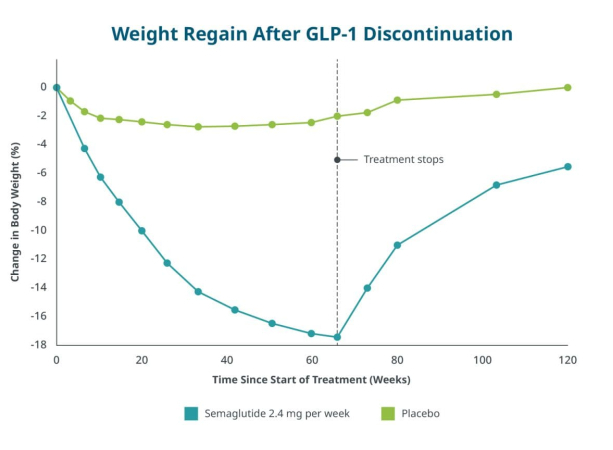
Improvements in Co-Morbid Conditions Are Reversed and Return to Pre-Weight Loss Values
The study also found that improvements in health markers, such as blood sugar, cholesterol, and blood pressure found with weight loss,tend to fade after stopping the medication. These benefits usually disappear within 12 to 18 months, which shows that obesity is a long-term condition that needs ongoing care. This information should change how patients and doctors view treatment. GLP-1 medications are not just for short-term weight loss. They are long-term treatments for metabolism. Stopping them suddenly without a plan is similar to stopping treatment for high blood pressure or diabetes. Gaining weight after stopping these medications is not about willpower. It is a normal response that includes feeling hungrier, feeling less full, and changes in metabolism.
Moving to a Structured Maintenance Plan
A better approach is to help patients transition to a structured maintenance plan rather than stopping treatment all at once. Dr Lipman has used all 4 of these alternatives
GLP-Micro-dosing:
One useful and common method is GLP-1 micro-dosing, in which patients remain on a lower dose after reaching their goal weight. This helps control appetite and can reduce costs and side effects. Many people can keep their weight steady on much lower doses than those used for losing weight.
Once Monthly GLP-1 Dosing:
Another new approach is intermittent or once-monthly dosing, in which patients receive one injection each month, often at the beginning of the month, to help control appetite every month while increasing the frequency during periods when weight gain is more likely like holidays, vacataions. This method is not yet officially standard, but it is a practical solution to cost and access problems and can work well for some people. I have treated more than 500 patients after major weight loss with once-a-month GLP-1 successfully for 2 years.
Transition to Generic Anti-Obesity Medications–Metformin
Another method to prevent weight gain after cessation of GLP-1 therapy has been tried using generic anti-obesity medications. This includes Metformin, Phentermine, Topamax and even bupropion. Paddu treated 105 patients post-Glucophage 1 therapy with several older anti-obesity medications. For six months not only did the authors note no weight gain, there was continued slow weight loss with these medications. This is another alternative to stopping GLP-1 medications without a significant alternative.
Behavioral Changes:
In addition to medication, maintaining weight loss requires certain behavioral changes. Eating enough protein helps keep muscle and makes you feel full. Resistance training is important to prevent your metabolism from slowing down and to avoid losing muscle. Patients should be monitored for early signs of ‘food noise‘ returning, as this often indicates they need more support or a dose adjustment.
The main point for doctors and patients is clear: long-term success with GLP-1 medications depends on keeping the weight off, not just losing it. This requires a proactive, personalized plan that might include staying on a low dose, using the medication intermittently, or combining it with other treatments. Without a plan like this, most people will slowly regain the weight.