
Microdosing Ozempic/Wegovy & Zepbound/Mounjaro for Weight Loss, Maintenance, and Inflammation
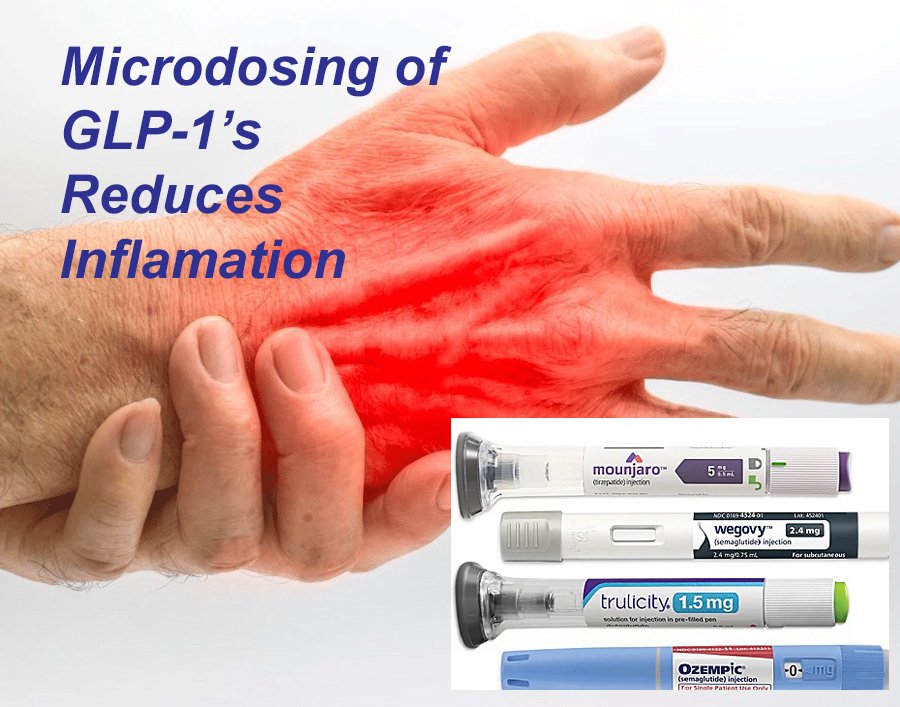
GLP-1 microdosing reduces inflammation
by Dr Richard Lipman MD., Endocrinologist,
Reviewed and Rewritten March 3rd, 2026
Microdosing GLP-1 medications, including Ozempic/Wegovy and Zepbound/Mounjaro, for weight loss and maintenance means taking lower than the FDA-approved starting, titration, and maintenance doses. Microdosing offers several advantages, especially for individuals who are new to GLP-1 medications or are sensitive to gastrointestinal side effects like nausea and bloating. These benefits include:
- Improved tolerability with much fewer side effects — Ideal for patients over 50 or those with a history of sensitivity, usually gastrointestinal. Telemedicine patients can make rapid changes in their doses .
- Cost-effective — Patients paying out-of-pocket can stretch a single pen over multiple weeks
- Better adherence — A gentler start reduces dropouts.
The goal is to minimize side effects, especially gastrointestinal ones (nausea, bloating, constipation), while still gaining some early appetite control and weight loss. Microdosing has transformed GLP-1 weight loss and maintenance by effectively reducing hunger and cravings while supporting fat loss, with fewer side effects and at much lower cost. Medications used in microdosing include the Semaglutides (Wegovy, Ozempic) and the Tirzepatides (Mounjaro, Zepbound). Individuals taking these medications are dealing not only with their excess weight but with numerous co-morbidities like hypertension, diabetes, heart failure, strokes, sleep apnea, and arthritis. Many of these co-morbidities are also reduced with GLP-1 medications, even at the very low doses used in microdosing.
Even though doses are much lower than approved by the FDA, we have seen both immediate weight reduction and prolonged weight control. We have found the advantages of microdosing GLP-1 medications by demonstrating comparable weight-loss results with reduced costs and side effects, while also improving availability. Typical starting and maintenance doses may be 50% of the usual dosages. Other studies using less than 0.4 mg of semaglutide showed 13-14% weight loss.
Splitting the Weekly Dose:
Although not strictly a microdosing, taking the intended dose and splitting it over two days in the week often reduces side effects and can increase weight loss in many cases. Weekly doses are frequently divided between Thursday and Monday, and Friday and Tuesday. This leads to greater tolerability and fewer side effects for many individuals. In these cases, the dose per week remains the same. It’s just spread over the week more evenly.
Microdosing of Wegovy and Zepbound: The Starting Dose:
Microdosing GLP-1 medications for weight loss and maintenance typically begins with a starting dose, usually half the usual dose (0.125 mg) or one-quarter of the usual dose (0.0625 mg). These doses are well below the “normal” therapeutic levels. Often, this is done for medical reasons in addition to the other reasons described here.When taking very low doses watch the size of the syringes, you need small syringes such as o.3cc or at most 0.5cc to get accurate meaurements.
For example, the starting dose of Wegovy is 0.25 mg/week. Still, individuals with a history of GERD, heartburn, gastritis, taking Pepcid or other acid blockers are often started on 0.125 mg per week and advanced more slowly. This dose can often be lower and split into two equal doses during the week. They may lose most of their weight on 0.75 to 1 mg per week or less. The patient has fewer side effects, spends less money, and finds the pens easier to find.
Another example might be an older patient taking many medications for heart failure and kidney disease. It might be best to start him on half the starting dose of Zepbound, such as 1.25 mg/week, then increase the dose in 1/2 of the usual intervals. The strategy behind microdosing GLP-1 receptor agonists involves using lower doses to achieve weight-loss benefits while limiting side effects associated with higher doses. GLP-1 medications trigger weight loss through multiple mechanisms: they promote insulin secretion while reducing glucagon release, delay gastric emptying, and decrease appetite.
Microdosing of Wegovy and Zepbound-Titrating to Higher Doses:
Microdosing GLP-1 medications yields weight-loss results comparable to those achieved with higher doses. Standard medications such as Semaglutide (Wegovy) lead to marked weight loss (15-20% of body weight), but early clinical evidence and anecdotal reports indicate that lower doses can also achieve similar weight loss, though the exact percentage may be slightly reduced. microdosing..
Patients who respond well to low doses but worry about potential side effects from higher doses will find this phenomenon advantageous. Microdosing promises sufficient appetite control and metabolic benefits while avoiding the increased risk of gastrointestinal side effects, including nausea and vomiting.
The potential for reduced costs is one of the strongest arguments in favor of using microdosed GLP-1 medications. The full doses of GLP-1 medications prescribed for weight loss treatment tend to have high costs and often limited availability. The monthly cost of Wegovy (Semaglutide) treatment ranges between $1,300 and $1,500. Patients can reduce their treatment costs by taking smaller doses of medication while still obtaining therapeutic benefits, especially when they respond well to lower doses.
Financial constraints prevent many patients from accessing weight loss treatments, while microdosing serves as a more affordable solution. Microdosing these medications expands accessibility to weight loss treatments for patients who do not have insurance plans that cover such drugs.
Microdosing GLP-1 medications for weight loss and maintenance means taking lower than FDA approved starting, titrating, and often maintenance doses of the medicines. See Table 1 on microdosing:
10-Week Tables: Microdosing Schedule: Semaglutide and Tirzepatide
Table 1 : Microdosing Schedule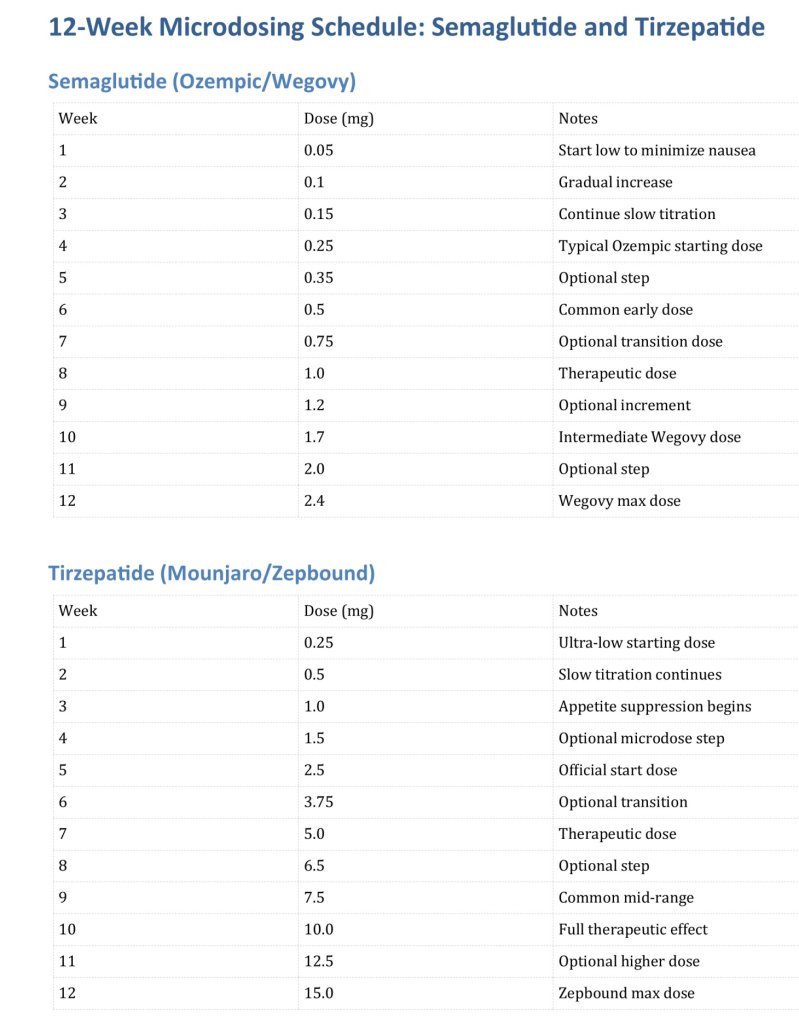
Microdosing Adds Easier Availability of GLP-1’s
Microdosing also makes GLP-1 medications more accessible. Full-dose GLP-1 medications face availability restrictions in numerous regions due to shortages and supply chain challenges. The distribution of medication demand becomes more balanced when smaller quantities are used, which can help reduce some supply limitations. Prescriptions for lower doses are becoming more accessible to some individuals who need them for weight maintenance following substantial weight loss.
Microdosing Results in Fewer Side Effects
Administering greater amounts of GLP-1 medications leads to various side effects which predominantly manifest as gastrointestinal problems such as nausea, vomiting and diarrhea. The debilitating side effects of these treatments often result in patients choosing to stop their medications. Lower doses through microdosing can decrease the frequency and intensity of side effects because the body handles these reduced amounts more comfortably. Some patients might continue their treatment with GLP-1 medications because microdosing eliminates the discomfort associated with high doses.
Microdosing of GLP-1 Permits Active Weight Loss
Those actively working to lose weight can achieve effective results with microdosing. The belief that higher-dose GLP-1 medications produce faster weight loss contrasts with microdosing, which still effectively suppresses appetite and aids fat loss over time. The gradual weight loss
that microdosing produces creates a more sustainable weight management option for those who favor slow progress over faster but potentially unsustainable weight reduction. effects that often interfere with their daily activities during periods of active weight loss. In the graph to the left, notice the very little difference between 10 and 15 mg doses. The 5 mg dose yields less weight loss, but is still acceptable when taking into consideration of the reduction in cost and potential side effects for many people.
Microdosing of GLP-1’s Encourages Long-Term Weight Maintenance
A primary problem in weight-loss treatment is maintaining weight loss over the long term. Maintaining new body weight presents a significant challenge for many people after they have lost weight. Microdosing GLP-1 medications serves as a potential long-term weight maintenance strategy because these medications regulate appetite and sustain metabolic health at minimal doses, at a low cost, and with much easier availability.
Microdosing is a key component of comprehensive weight-maintenance strategies, integrating healthy diets and exercise with the steady appetite suppression provided by GLP-1 medications. Patients using low doses for extended periods may prevent weight regain which regularly occurs after traditional weight loss programs.
Microdosing of GLP-1’s: What are the Differences in the Medications
Microdosing can be implemented across all available GLP-1 receptor agonists, but requires consideration of each drug’s unique properties.
Semaglutide (Wegovy/Ozempic) is among the leading GLP-1 medications for weight reduction. This medication requires weekly administration and yields significant weight loss. Microdosing Semaglutide is an attractive option for people who want to lose weight gradually while experiencing fewer side effects.
Tirzepatide (Mounjaro/Zepbound) is a dual agonist medication that targets both GLP-1 and GIP receptors. This positions them as highly effective treatments for weight loss. Microdosing Tirzepatide currently yields the most significant weight loss.
Microdosing GLP-1 drugs offers a promising weight-loss approach, balancing effectiveness with cost-efficiency and manageable side effects, with better access. Research needs to continue to achieve a complete understanding of the long-term effects, while early evidence indicates that microdosing is effective for weight reduction and long-term maintenance. The introduction of microdosing, as an affordable and easy-to-access treatment, improves the success rates of GLP-1 therapy for obesity and metabolic health management. Many physicians are using microdosing to obtain benefits in addition to weight loss, including cardiovascular benefits, renal benefits, and especially Alzheimer’s, dementia, and inflammation of joints, including back and neck. Apparently, it takes very low doses to achieve effective results.
Microdosing of Ozempic Differs from Other GLP-1’s
When it comes to Ozempic, microdosing differs from the other three medications because of the Ozempic pen’s design. Older than the other current pens used for Zepbound, Mounjaro, and Wegovy, this pen allows multiple doses by “clicking” a wheel at the end of the pen. By counting clicks, very small doses of Ozempic can be administered:
Microdosing Differences Between GLP-1 Medications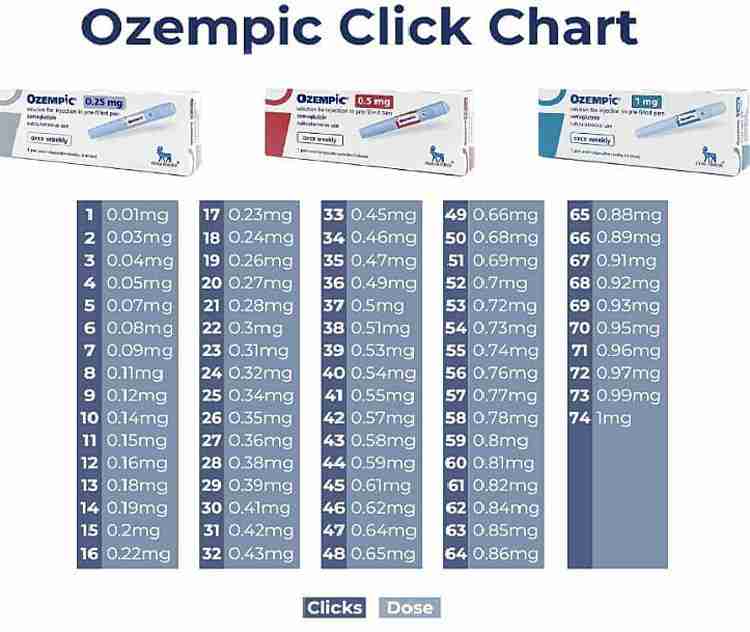
Microdosing can be implemented across all GLP-1 receptor agonists currently available, but requires consideration of each drug’s unique properties.
* Semaglutide (Wegovy/Ozempic) stands out as one of the leading GLP-1 medications used for weight reduction. This medication requires weekly administration and yields significant weight loss. Microdosing Semaglutide stands out as an attractive option for people who want to lose weight gradually while experiencing fewer side effects.
* As a dual agonist medication, Tirzepatide (Mounjaro) targets both GLP-1 and GIP receptors which positions it as a highly effective treatment for weight loss. Microdosing Tirzepatide has not been extensively researched yet shows promise as a superior treatment for appetite reduction and fat burning through lower doses.
* The medication Liraglutide (Saxenda) serves as a GLP-1 agonist to aid weight loss although it needs daily injections. Microdosing Liraglutide provides a more practical treatment choice for patients requiring smaller doses and less regular medication administration.
Ideal Candidates for Microdosing:
- Over 50 or with a slower metabolism
- History of GI side effects on GLP-1s or history of gastric disease as evidenced by taking prescription medications
- Paying out-of-pocket (can stretch a pen over 8–10 weeks)
- Restarting after stopping due to intolerance
Microdosing involves Special Considerations:
- Requires Medical Supervision: Microdosing is off-label and not supported by the drug’s labeling. Patients must be trained in sterile technique and in precise dosing.
- Pens are not designed for this use: You must bypass the pen’s click-delivery system and use vials from Lilly Direct or remove the medication from the vials manually.
- No official support from Eli Lilly: But widely used by physicians in private weight loss practices and telemedicine. One of the most cost-saving benefits is to learn to extract the GLP-1 from 15 mg pens. There are several techniques for this, and an easy way to find them is to search on YouTube videos.
Microdosing of GLP-1 Medications Offers Many Advantages
Microdosing GLP-1 drugs presents a promising weight-loss approach by offering a balance of effectiveness, cost-efficiency, and manageable side effects, with better access.
At Dr. Lipman’s Miami Diet Plan, we offer personalized care to patients seeking weight management and glycemic control with semaglutide and tirzepatide. This includes Qsymia, Wegovy, Zepbound, and Mounjaro. We offer microdosing of these medications, starting with the lowest doses, biweekly or even tri-weekly dosing, and once-monthly maintenance treatments. Our microdosing is always individual for each patient, with the goals of maximal weight loss and minimal side effects at the lowest possible cost. Our team provides:
-
- Expert guidance on dosing strategies.
- Tailored treatment plans, including microdosing options.
- Comprehensive support for long-term success.
Contact us today to schedule a consultation and start your journey to better health with Semaglutide and Tirzepatide Medications
-
- Phone: 305-670-3259
- Email: medoffice728@gmail.com
- Website: www.richardlipmanmd.com
- Location: Miami, Fl 33143
The introduction of microdosing as both affordable and easy-to-access treatment improves GLP-1 therapy success rates for obesity and it’s metabolic compilations. New studies are finding multiple benefits from microdosing, including reducing inflammation in many organs of the body, especially muscles and joints. Let us help you achieve lasting results and improved well-being!