Weight Loss Plateaus on GLP-1’s vs. Weight Loss Slow Downs
Medically reviewed and updated for 2026
Dr. Richard Lipman MD
Board-Certified Internist and Endocrinologist
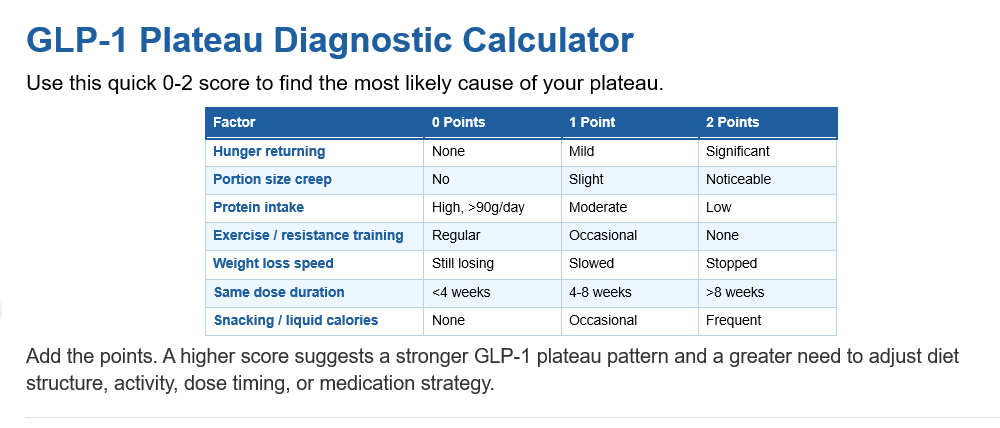
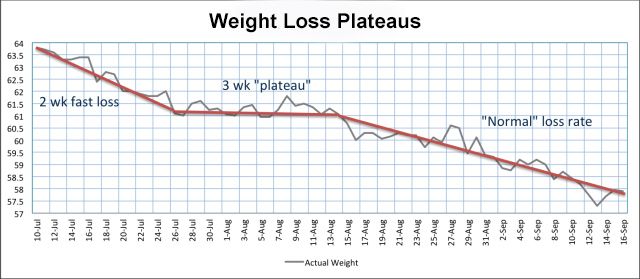
Plateaus are periods when the usual rate of weight loss slows, often to no weight loss at all. Often, the problem is the “normal” slowing of metabolism during weight loss, known as metabolic adaptation. Getting off a weight loss plateau is the secret to successful weight loss. Weight-loss plateaus can occur with any weight-loss plan. In my office in Miami I have seen them for over 40 years with diets based on calorie counting, keto, fasting,oral appetite suppressors, and even semaglutide and tirzepatide injections such as Ozempic, Wegovy, Mounjaro, and Zepbound. Weight loss plateaus are common. They are often preceded by weight loss slowdowns. The problem is to differentiate the slowdown from the plateau. Figure 1 show weight loss plateaus.
Figure 1: Weight Loss Plateaus
Metabolic Adaptation is the Major Cause of Weight Loss Plateaus
Food, Medication Mistakes and Lack of Exercise are Common Causes of Weight loss Plateaus
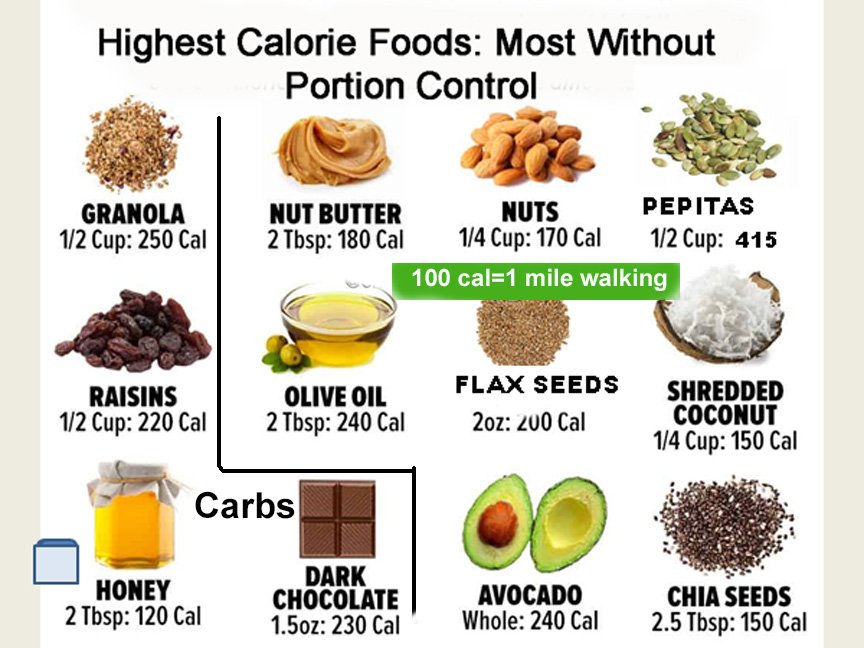
Let’s face it–diets are boring. If the diet has little variety, it’s likely to make food mistakes. Keep a diary of your food intake, looking for food mistakes, especially additives like nuts, seeds, PB, olive oil, alcohol, avocados, salad dressings. It’s easy to overeat these foods and consume huge number of calories. Seek foods high in natural vitamins like vitamin B 12.Vitamin B-12 Naturally Boosts Metabolism Increasing Weight Loss. Add protein to all meals so total protein is more than 90 grams per day and total carbs is less than 50 grams per day.
Medication Mistakes Produce Plateaus
Increasing the dosage and/or changing the timing: Effectiveness and even side effects gradually diminish as immunity to many of these medications develop progressively over time. The remedy is to take higher doses, or even split the medications into twice a week.
Changing the Medications: There 6 FDA approved weight loss drugs including 4 inject able medications. When one medication becomes ineffective it’s easy to change to another one. Many work differently in the body, so if you body become immune to one medication, another might be more effective. Examples might be changing from Wegovy to Zepbound both with the brand and compound.
Other medications slow weight loss, such as beta blockers, diabetic medications, and most important medications used for depression, anxiety, and psychotic behaviors.
Increase the Exercise
While less important in the beginning of a weight loss program, it becomes more important when weight loss slows down. Your goal is toINCREASE THE EXERCISE: burn 300-400 calories- 3 times a week-doing aerobic exercise like walking, bike, treadmill, elliptical. Weight lifting is even better because of loss of muscle mass with this diet.
Changing the Macros to Get Off the Plateau
CALORIES, CARBS, PROTEIN: Reduce calories by 200 calories per day. (950-1000 for women & 1250 for men) & CARBS as low as possible. Limit carbs to 50-60g per day and make sure to have at least 30 grams of protein at each meal. Protein distributed thru the day is more effective that at one meal in increasing metabolism. This makes high protein/low carb bars effective addition to any weight loss or weight maintenance program.
.