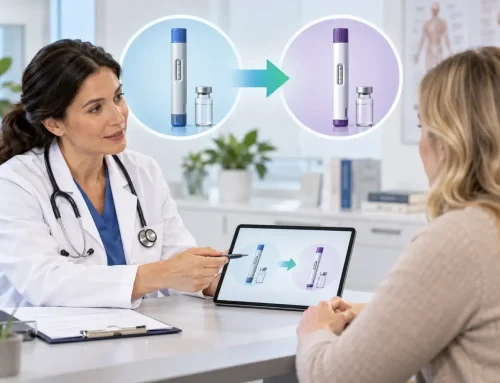
I have treated more than a thousand patients with compounded semaglutide and tirzepatide. When these medications are prepared by the licensed compounding pharmacies I use, prescribed appropriately and adjusted to the individual patient, I have seen weight-loss results comparable to what I see with branded GLP-1 medications.
That clinical experience is important because compounded GLP-1 medications have allowed many patients to receive treatment they otherwise could not afford. They also give me considerably more flexibility with dosing, particularly for patients who develop side effects at standard dose increases or who respond well to smaller amounts of medication.
Wegovy and Zepbound have important advantages of their own. They are FDA-approved products with standardized manufacturing, fixed concentrations, extensive clinical-trial evidence and convenient delivery systems. Insurance coverage has also improved for some of my patients, making branded treatment more practical than it was several years ago.
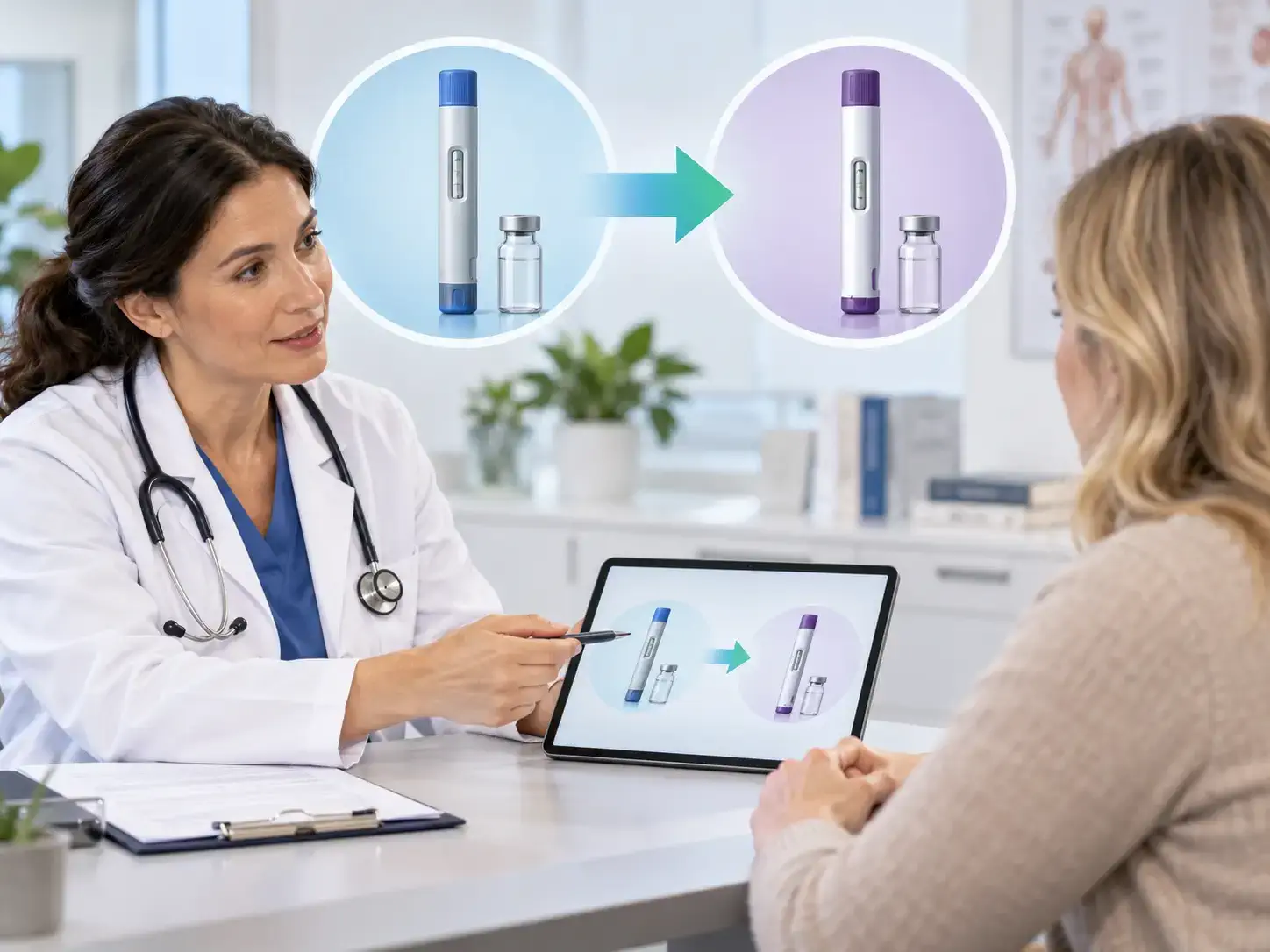
The decision between branded and compounded treatment has become less about which one is universally “better” and more about which option fits the individual patient’s medical needs, response, tolerance, insurance coverage and cost.
Why Compounded GLP-1 Medications Remain Important
Cost has always been one of the biggest practical barriers to GLP-1 treatment.
When insurance does not cover an obesity medication, the out-of-pocket cost of a branded drug can be difficult to sustain month after month. That becomes even more important because successful obesity treatment often extends well beyond the first few months of active weight loss.
Compounded medications have allowed many of my patients to remain on treatment rather than stopping because they cannot afford the brand.
The situation is changing. More of my patients are now obtaining coverage for branded obesity medications than in the past, and additional FDA-approved indications have expanded the clinical uses of these drugs. Zepbound, for example, is FDA approved for chronic weight management and for moderate-to-severe obstructive sleep apnea in adults with obesity.
When insurance brings the cost of Wegovy or Zepbound down to a reasonable level, the branded product may be the simplest choice. When coverage is poor or unavailable, cost can still make a compounded option much more practical.
What I Have Seen With Weight Loss
In my practice, properly sourced compounded semaglutide and tirzepatide have produced substantial weight loss, and I have generally seen results comparable to those of the corresponding branded medications. That is a clinical observation from treating more than a thousand patients. It should not be confused with evidence that every compounded preparation from every pharmacy is equivalent to Wegovy or Zepbound.
The strongest published weight-loss evidence comes from clinical trials of the FDA-approved products. Compounded formulations have not been tested in the same large randomized trials, and FDA does not review an individual compounded preparation for safety, effectiveness or manufacturing quality before it is dispensed.
The quality and source of a compounded medication therefore become especially important. For that reason, we are always 100% transparent with patients about which compounding pharmacy is supplying their medication.
Microdosing Gives Me More Control Over Treatment
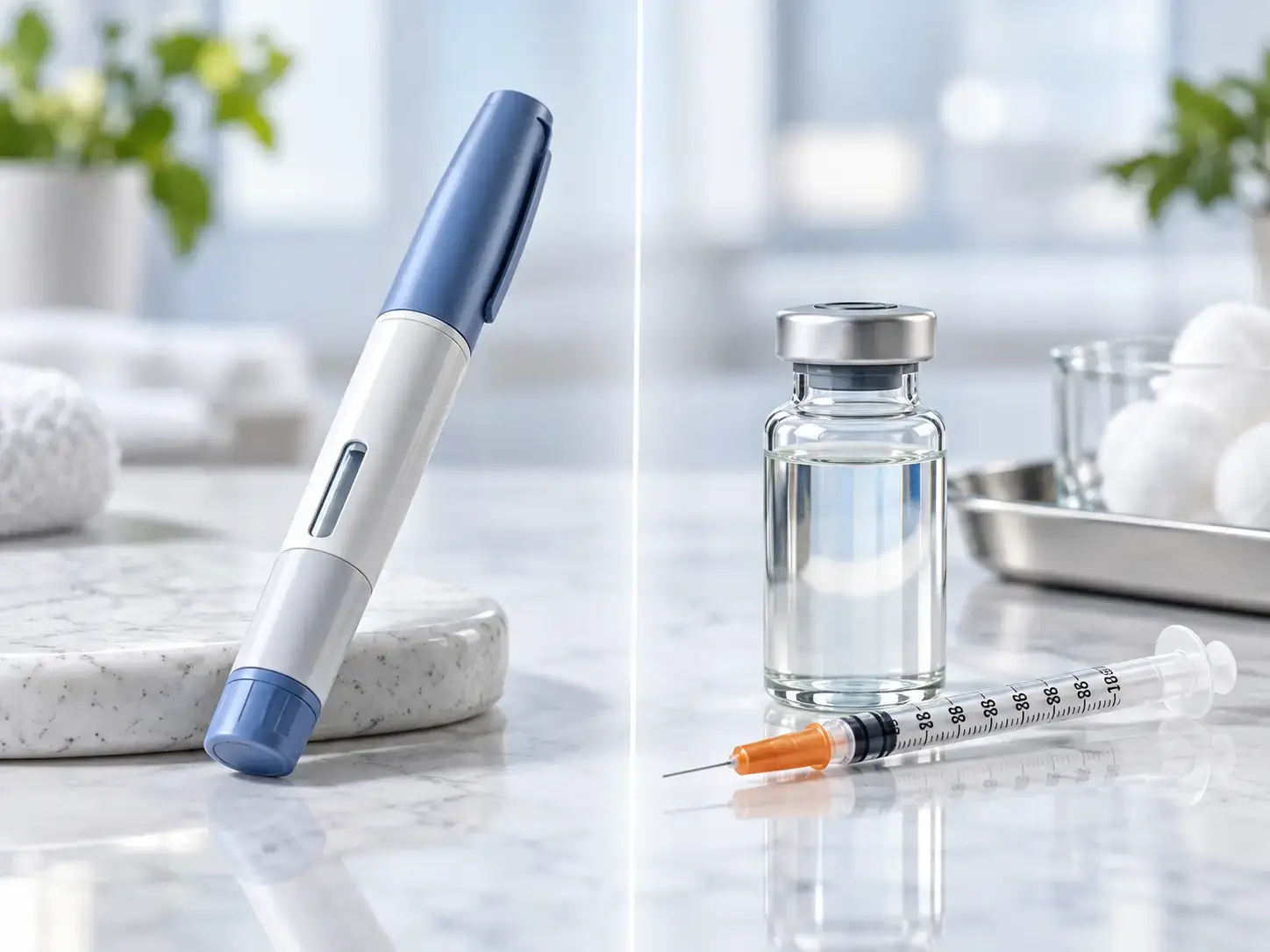
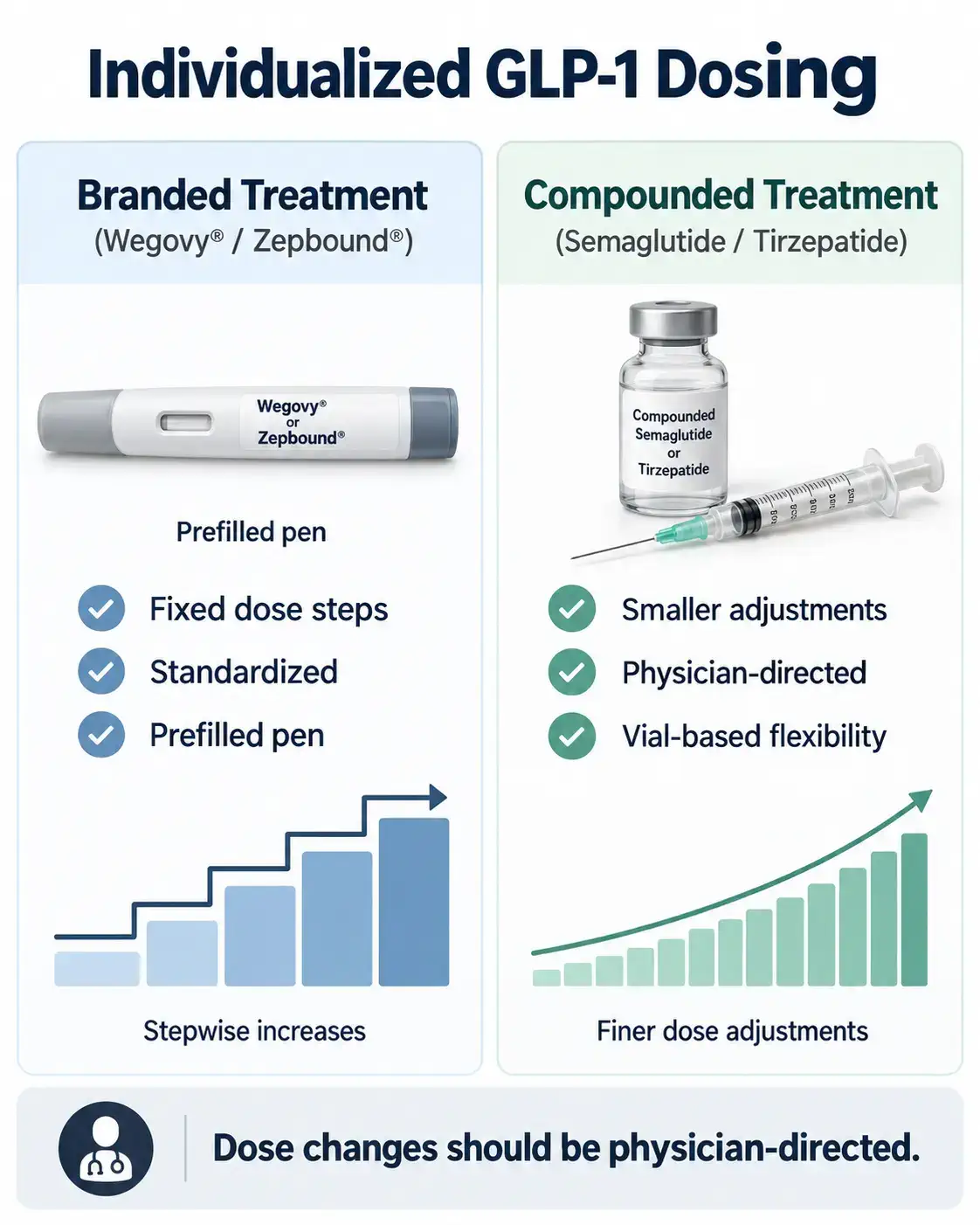
One of the most useful differences between compounded medication and many commercial delivery systems is dosing flexibility. A fixed-dose pen provides a predetermined amount of medication. A multidose compounded vial can allow me to prescribe smaller dose changes when appropriate. I use that flexibility frequently.
Some patients lose weight and have good appetite control at relatively low doses. There is no reason to increase the dose simply because the next standard dose exists. Other patients are very sensitive to nausea, reflux, constipation or other gastrointestinal effects. Moving in smaller increments can make treatment easier to tolerate.
This is particularly useful when restarting a GLP-1 medication, switching treatments or treating someone who previously had difficulty with standard escalation.
Microdosing does not mean patients should calculate or change their own dose. With compounded medication, concentration and volume determine the actual milligram dose, so I provide specific dosing instructions for the preparation being dispensed.
FDA has also warned physicians and patients about dosing errors involving compounded injectable semaglutide, particularly when milligrams, milliliters and syringe units are confused. This is why we provide patients with preloaded syringes based on their prescribed dose.
Compounded GLP-1 Formulations I Use
Compounding allows more than a single fixed formulation. The licensed compounding pharmacies I work with can prepare several semaglutide formulations. The most common formulations available in my treatment experience include preparations using semaglutide with:
- Vitamin B12
- Vitamin B6
- L-carnitine
- NAD+
Similar combinations are available with compounded tirzepatide. The exact formulation depends on the patient’s prescription, clinical need, and availability.
Vitamin B12 and L-carnitine combinations have been among the formulations I have used most often. In my own experience, weight loss has been similar between them. I have seen somewhat fewer gastrointestinal complaints with the B12 formulation in some patients, but that is an observation from my practice rather than evidence from a randomized comparison.
Side Effects: Compounded vs. Brand GLP-1 Medications
The side effects I see with compounded semaglutide and tirzepatide are generally the same types of effects seen with branded GLP-1 medications. The most common problems involve the gastrointestinal tract:
- nausea
- constipation
- diarrhea
- reflux
- abdominal discomfort
- occasional vomiting
Those effects are also well documented in the prescribing information and clinical trials for Wegovy and Zepbound.
Dose selection often has more practical importance than whether the medication came in a branded pen or a compounded vial. A patient who develops significant nausea after a large dose increase may do much better with a smaller adjustment. This is another reason I value the ability to individualize compounded doses.
Older Patients and Patients With Gastrointestinal Problems Need More Cautious Dosing
I am especially conservative with GLP-1 treatment in older adults and in patients with a history of gastrointestinal problems. Patients with significant reflux, chronic nausea, previous difficulty tolerating GLP-1 medication, gallbladder disease or other gastrointestinal conditions may need a lower starting dose, slower escalation or closer monitoring.
Older patients can also be more vulnerable to dehydration, inadequate nutrition and loss of strength if appetite suppression becomes excessive. The goal is effective appetite control and weight loss without pushing the dose beyond what the patient can comfortably tolerate.
FDA-approved GLP-1 labeling also includes warnings involving severe gastrointestinal reactions, pancreatitis, gallbladder disease, kidney injury related to volume depletion and other clinically important risks. Those warnings apply when deciding whether GLP-1 treatment is appropriate regardless of whether the prescription ultimately involves an FDA-approved product or a compounded preparation.

Where Branded Wegovy and Zepbound Have an Advantage
Wegovy and Zepbound provide standardization. The manufacturer controls the formulation, concentration, delivery system and labeled dosing schedule. FDA has reviewed the products for their approved indications, and the pivotal clinical trials used those specific formulations. For patients with good insurance coverage, that combination of convenience and evidence can make the branded product the obvious choice.
A prefilled injection device also removes the need to draw medication from a vial, which can reduce opportunities for measurement errors. I increasingly use branded GLP-1 medications when the patient’s insurance makes them affordable and the available dose schedule fits the treatment plan.
Where Compounded Treatment Has an Advantage
Compounded treatment can offer two significant practical benefits: affordability and dosing flexibility. For a patient paying cash, the cost difference can determine whether treatment continues at all. For a patient who is unusually sensitive to medication, the ability to make smaller changes may be more useful than moving between predetermined commercial dose steps.
I also have patients who are doing extremely well at relatively low doses. A compounded vial can allow me to maintain the amount that is working instead of purchasing a new fixed-dose product simply to obtain a different strength.
These advantages explain why compounded semaglutide and tirzepatide have remained an important part of my practice even as branded coverage has improved.

The Medication Source Is Part of the Prescription
I do not have patients shop online for a compounder. I select the licensed compounding source and control where the medication comes from. The medication dispensed through my practice comes from legitimate licensed compounding pharmacies that provide the concentration, formulation, and labeling needed for the prescription.
That is very different from purchasing an unlabeled vial from an online seller, buying a “research use only” peptide, or using a product whose source and concentration cannot be verified.
FDA has specifically warned about fraudulent GLP-1 products, dosing errors and semaglutide salt forms such as semaglutide sodium and semaglutide acetate. FDA states that these salts are different active ingredients from the semaglutide base used in approved medications and says it is not aware of a lawful basis for their use in compounding. U.S. Food and Drug Administration
I do not consider questionable online products equivalent to medication obtained through a clinician from a state-regulated, licensed compounder or 503B outsourcing facility that is subject to FDA GMP rules and oversight.
What the FDA Says About Compounded GLP-1 Medications
Compounded medications occupy a different regulatory category from Wegovy, Zepbound and other FDA-approved products. FDA recommends using a compounded drug when a patient’s medical needs cannot be met by an available FDA-approved product. It also recommends that patients obtain compounded medications through a prescription and a state-licensed pharmacy.
The rules have tightened since the semaglutide and tirzepatide shortages resolved. Under current FDA policy, traditional Section 503A compounding must be patient-specific, and pharmacies generally cannot routinely make products that are essentially copies of commercially available drugs. A prescriber may document that a compounded preparation produces a significant difference for an identified patient when appropriate. Those requirements are compatible with individualized medical treatment when a legitimate patient-specific need exists.
When I Choose Compounded Treatment
I may consider a compounded GLP-1 when:
When I Prefer Wegovy or Zepbound
I am more likely to use the branded product when:
I use both approaches. The decision changes as the patient’s treatment, insurance coverage, tolerance, and weight-loss response change.
From Dr. Lipman’s Practice
Compounded semaglutide and tirzepatide have allowed me to treat many patients who otherwise could not have stayed on GLP-1 medication because of cost. They have also given me dosing flexibility that I cannot always get from a fixed commercial device.
In the patients I have treated with compounded GLP-1 medications, I have seen excellent weight-loss results when the medication is sourced properly and treatment is individualized. Along with medical supervision of the patient’s overall weight loss journey, the source, formulation, concentration, and dosing instructions are part of the treatment. That is what distinguishes physician-guided care from buying compounded medications online from unknown sources.
As insurance coverage for Wegovy, Zepbound and other branded medications improves, more patients will choose the branded products. Others will continue to have legitimate reasons for compounded treatment. Both can have a place in physician-supervised obesity care.