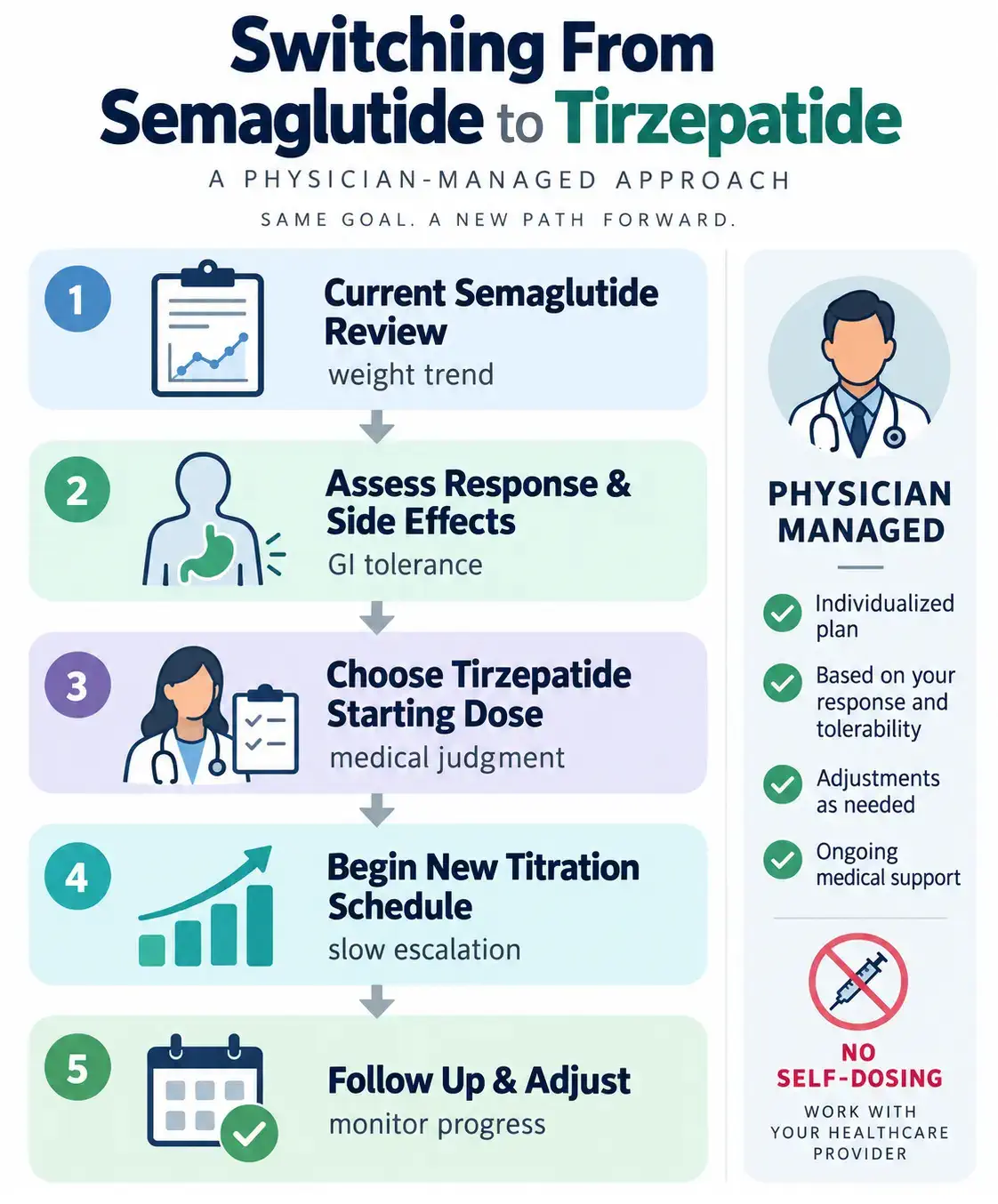

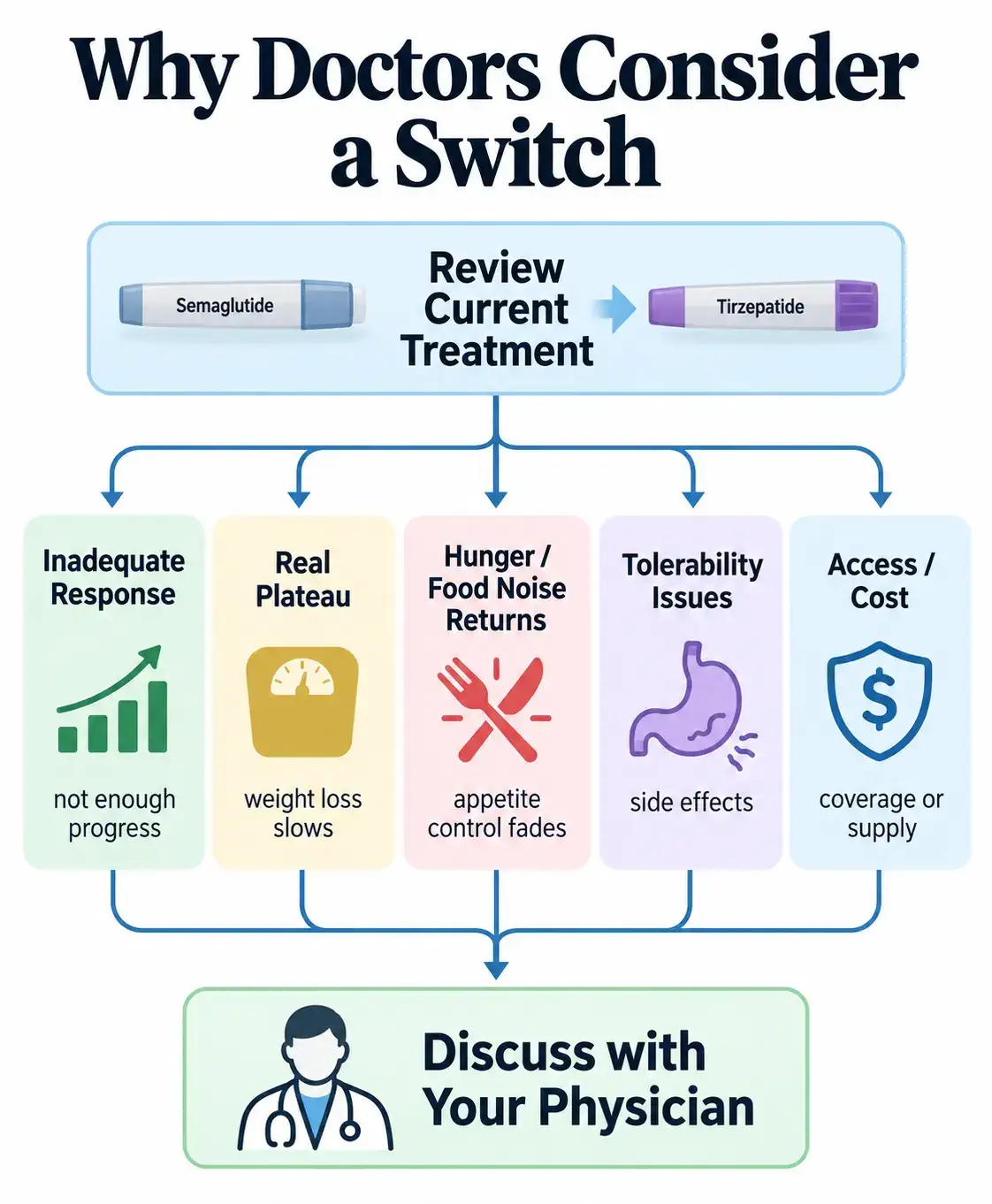
Switching from semaglutide to tirzepatide can make sense when weight loss has been inadequate, appetite control has weakened, a persistent plateau has developed, side effects are difficult to manage or access and cost have changed. Tirzepatide produces greater average weight loss than semaglutide in current head-to-head obesity data, but switching is not simply a matter of converting one milligram dose into another.
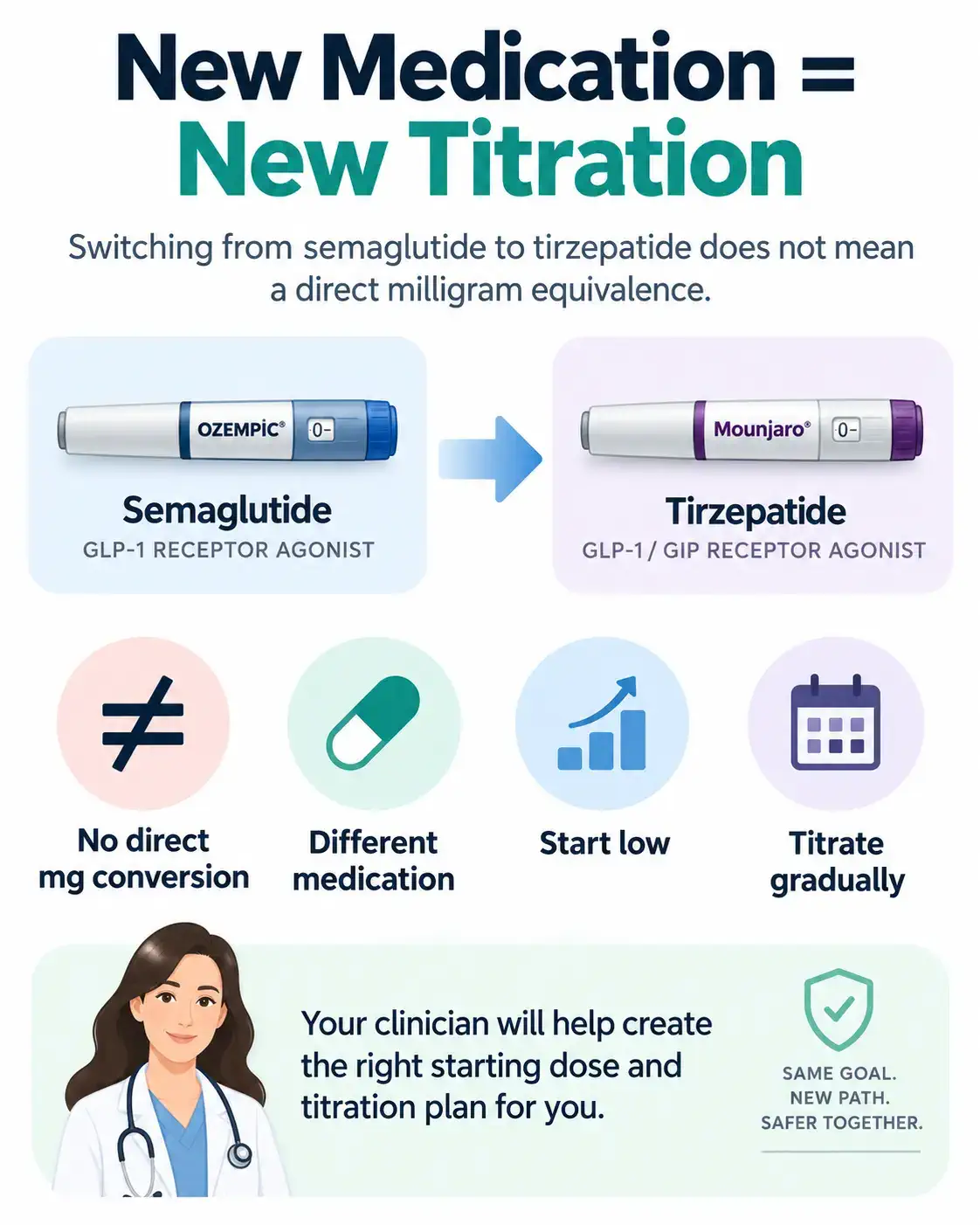
Semaglutide and tirzepatide are different medications with different dose ranges and mechanisms. Semaglutide acts on the GLP-1 receptor. Tirzepatide acts on both GIP and GLP-1 receptors. A patient who has tolerated a high dose of semaglutide may still need a careful transition and titration with tirzepatide.
Reasons Doctors Switch from Semaglutide to Tirzepatide
Before switching for a plateau, I first look for other causes. Calories can creep back up, protein may be too low, activity can fall, constipation can mask progress, or the patient may simply be in a slower phase of continued weight loss. Changing drugs should solve a real problem, not react to one disappointing week on the scale.
Tirzepatide Produces More Weight Loss on Average
The SURMOUNT-5 head-to-head trial directly compared tirzepatide with semaglutide in adults with obesity without diabetes. At 72 weeks, average weight loss was 20.2% with tirzepatide and 13.7% with semaglutide. More participants receiving tirzepatide also reached the higher weight-loss thresholds.
That is a strong reason to consider tirzepatide after a partial response to semaglutide, but it is not a guarantee that every individual will lose more. Patients vary in appetite response, side effects and ability to tolerate dose escalation.
There Is No FDA Dose-Conversion Formula
The FDA-approved Zepbound prescribing information starts tirzepatide at 2.5 mg once weekly for four weeks and then increases the dose in 2.5 mg steps after at least four weeks, based on response and tolerability. The label does not provide a semaglutide-to-tirzepatide conversion chart.
Published practical guidance and small observational studies describe different switching approaches, particularly in diabetes care, but these are not substitutes for the product label or individualized prescribing. That is why patients should not use an online conversion table to decide their own starting dose.
Do You Need a Washout Period?
For once-weekly medications, practical switching guidance commonly starts the new weekly medication around the time the next dose would have been due rather than creating a long drug-free interval. The exact timing can change if the patient is switching because of significant gastrointestinal symptoms or another adverse effect.
If nausea, vomiting, dehydration or severe constipation is the reason for the change, it may be more appropriate to let symptoms settle before introducing another incretin medication.
What May Feel Different After the Switch?
Some patients notice stronger appetite or food-noise suppression as tirzepatide is titrated. Others mainly notice a renewed downward trend in weight after a semaglutide plateau. Gastrointestinal side effects can still occur because both medications affect appetite, digestion and gastric emptying.
A switch also resets expectations. The first few weeks on tirzepatide are not the time to decide whether the medication has failed. The starting dose is intended for treatment initiation and tolerability, and the full effect develops as the dose is increased over time.
What the Real-World Data Show
Switching is common in obesity practice. A real-world academic obesity-clinic study found that about one quarter of patients used both semaglutide and tirzepatide at different points. A separate retrospective study of patients with type 2 diabetes who switched from semaglutide to tirzepatide because of inadequate weight loss found further improvement in some patients, although the study was small and does not establish an ideal conversion strategy.
The important lesson is that switching happens frequently, but the evidence for exactly how to switch is much less mature than the evidence showing how each medication performs when started and titrated according to its own regimen.
From Dr. Lipman’s Practice
I want to know why semaglutide is being replaced. If the patient is still losing weight and appetite is well controlled, changing medication simply because tirzepatide has a higher average trial result may not improve anything. If hunger has returned, the weight has truly plateaued, or the response was inadequate, the switch has a clearer purpose.
Previous GLP-1 use and tolerability are factors, but I do not treat semaglutide and tirzepatide as milligram-for-milligram equivalents. Tirzepatide is a different drug with an added GIP mechanism and its own titration. The dose should be chosen around the patient, not around an internet chart.
When a Switch May Not Be the Answer
If the real problem is persistent overeating despite excellent appetite suppression, very low protein intake, inactivity, untreated constipation or poor adherence, changing drugs may simply move the same problem to a new prescription. It is also possible that a patient is already near an appropriate maintenance weight and should be thinking about maintenance rather than chasing continued loss.
A medication switch works best when it is part of a structured review of the entire weight-loss plan.
If semaglutide has stopped producing the result you expected, Dr. Lipman can review the weight trend, appetite response, side effects, current dose and treatment goals before deciding whether tirzepatide or another strategy makes sense.