

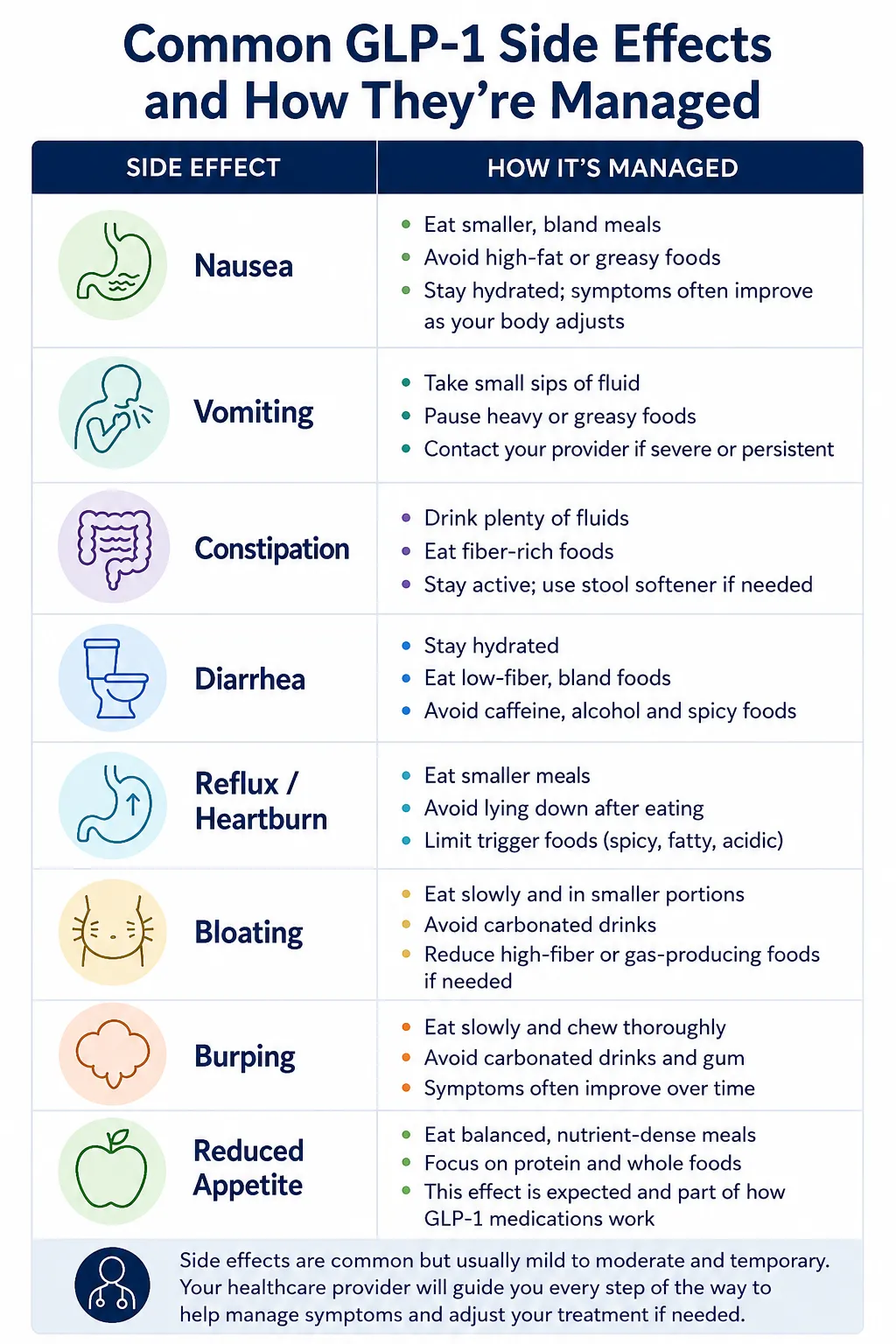
The most common GLP-1 side effects are gastrointestinal: nausea, constipation, diarrhea, vomiting, reflux, burping and abdominal discomfort. For many patients, these symptoms are mild to moderate and improve as the body adjusts. They are most likely to appear when treatment starts or when the dose is increased.
Side effects should not be treated as proof that the medication is working. Significant nausea or vomiting is not required for weight loss, and pushing the dose faster than a patient can tolerate can make treatment harder to continue. The better approach is to control symptoms early and adjust the plan when necessary.
Why GLP-1 Medications Cause Stomach and Digestive Symptoms
GLP-1 medications affect appetite centers in the brain and slow the movement of food through the stomach. Tirzepatide also activates the GIP receptor. These effects help people feel full sooner and eat less, but they can also produce fullness, nausea, reflux or bloating, especially after larger meals.
Clinical trials and expert reviews consistently show that gastrointestinal symptoms are most common during dose escalation. This is one reason approved dosing schedules begin low and increase gradually.
Nausea
Nausea is one of the most frequently reported GLP-1 side effects. It is often worst early in treatment or shortly after a dose increase. In many patients it becomes less noticeable with time.
Practical measures that often help include eating smaller meals, eating more slowly, stopping as soon as fullness appears, and temporarily avoiding greasy, fried or very sweet foods. Carbonated beverages and very large meals can also worsen fullness and burping in some patients.
Persistent nausea deserves a medication review rather than a contest of willpower. A physician may delay the next dose increase, reduce the dose temporarily, or use short-term symptom treatment when appropriate.
Constipation
Constipation may last longer than nausea because several factors can contribute at the same time. People often eat much less food on GLP-1 therapy, and reduced food volume can mean less stool volume. Lower fluid intake, lower fiber intake and reduced physical activity can make the problem worse.
A reasonable first step is to make sure fluid and fiber intake are adequate for the individual, increase activity when possible and review other medications that can cause constipation. Fiber supplements, osmotic laxatives or stool softeners may be useful for some patients, but persistent or severe constipation should be discussed with the prescribing clinician.
Diarrhea and Vomiting
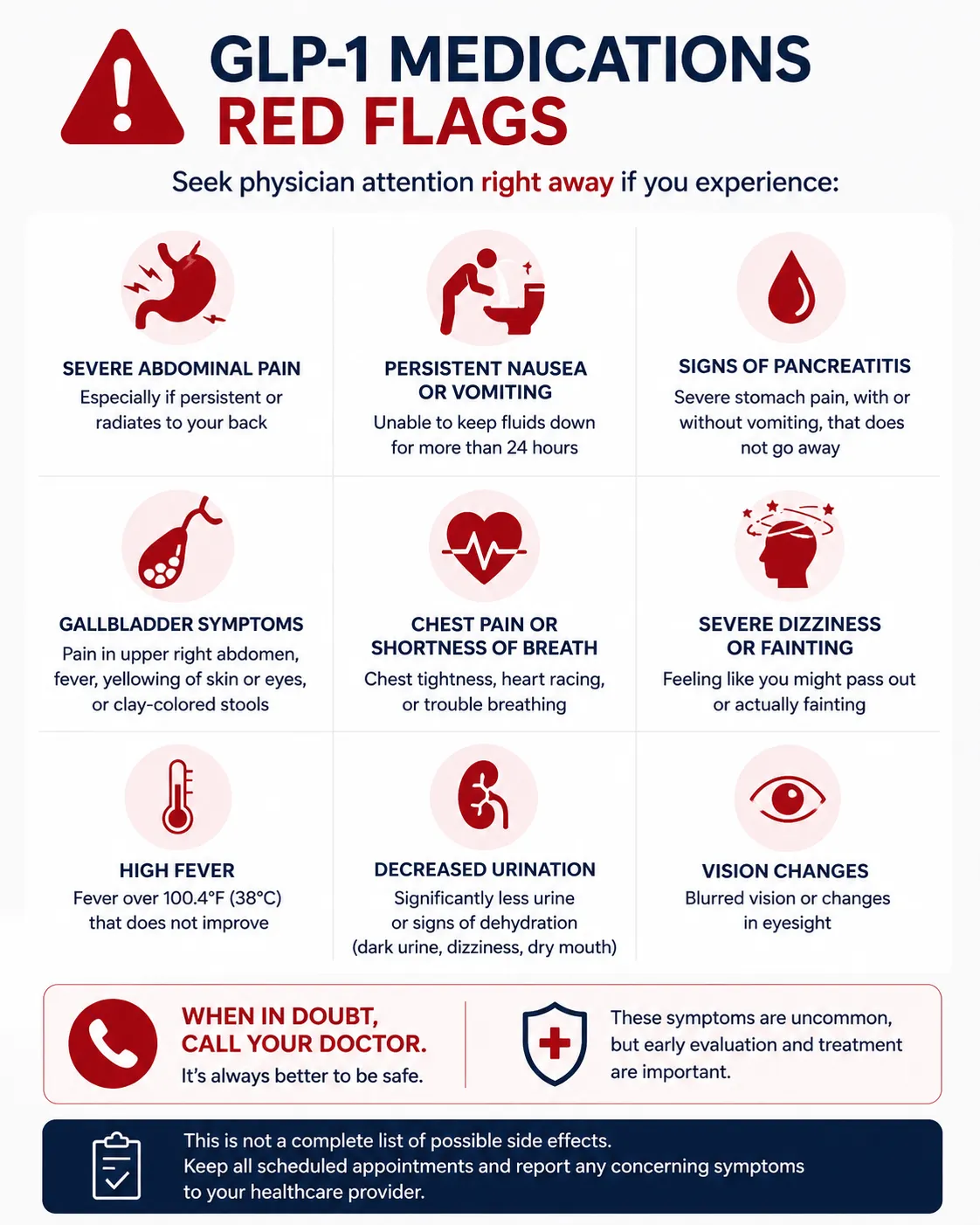
Diarrhea and vomiting are usually most common early in treatment or after dose escalation. Repeated vomiting is not something to ignore because dehydration can occur quickly. If a patient cannot keep fluids down, becomes dizzy, urinates very little or develops significant weakness, medical evaluation may be needed.
When symptoms are milder, smaller meals and temporary simplification of the diet may help. The prescribing clinician should also review whether the dose was increased too quickly.
Reflux, Heartburn, Burping and Bloating
Delayed stomach emptying and smaller changes in eating patterns can aggravate reflux, burping and post-meal fullness. These symptoms are often worse after large meals, high-fat meals or eating close to bedtime.
Smaller portions, avoiding lying down soon after eating and reducing foods that clearly trigger symptoms can help. Short-term acid-reducing therapy, such as over-the-counter or prescription antacids, is sometimes used when medically appropriate.
Fatigue, Hair Loss and Other Reported Effects
Fatigue can occur during treatment, particularly when calorie intake falls sharply, fluid intake is poor, or protein intake is inadequate. Hair loss is listed among common adverse reactions with tirzepatide and is also reported during major weight loss in general. Rapid weight reduction itself can trigger temporary shedding in some people.
These symptoms are a reminder that successful GLP-1 treatment is not just about eating as little as possible. Adequate protein, micronutrients, hydration and resistance exercise become more important as weight loss increases.
When a Side Effect Needs Prompt Medical Attention
Most digestive symptoms are uncomfortable rather than dangerous, but some symptoms require prompt evaluation. Contact your clinician or seek urgent care for severe or persistent abdominal pain, repeated vomiting with dehydration, symptoms of a serious allergic reaction, or significant abdominal pain that may suggest gallbladder disease or pancreatitis.
Both semaglutide and tirzepatide prescribing information include warnings for serious gastrointestinal reactions, acute kidney injury related to volume depletion, gallbladder disease and pancreatitis. They also carry boxed warnings related to thyroid C-cell tumors observed in rodents and are contraindicated in people with a personal or family history of medullary thyroid carcinoma or MEN 2.
Do You Have to Reach the Maximum Dose?
No. Approved treatment schedules provide maintenance-dose ranges for some medications, and clinical decisions should account for response and tolerability. There is no benefit in racing to a higher dose simply because it exists.
When symptoms appear during titration, expert consensus recommends flexibility. Dose escalation can be delayed, the current dose can be maintained longer, or the dose can be reduced in selected patients. Once symptoms settle, escalation can sometimes be resumed more gradually.
From Dr. Lipman’s Practice
The biggest practical mistake I see is treating the printed titration schedule as a deadline. Patients are not identical. If a dose is controlling appetite and producing weight loss, I do not see a reason to increase it just to reach a number on the box.
I also look closely at what the patient is eating. Large meals, fried foods, heavy fats, and eating past the first sign of fullness can turn mild medication effects into significant nausea or reflux. When the dose and diet are adjusted together, many patients can continue treatment comfortably.
The Goal Is Effective Treatment You Can Stay On
Mild GLP-1 side effects are common, but they are often manageable. Starting low, increasing gradually, adjusting food choices and responding early to symptoms can prevent a temporary problem from becoming a reason to stop treatment.
Do not change a prescription dose or start medications for side effects without discussing it with your clinician. Persistent symptoms can have causes unrelated to the GLP-1 medication and sometimes need a separate evaluation.
If side effects are interfering with your weight loss, Dr. Lipman’s GLP-1 Weight Loss Program includes individualized dosing, nutrition guidance and ongoing management rather than a prescription-only approach.