

A weight loss plateau is when you stop losing weight despite a consistent diet and exercise regimen that has previously helped you lose weight. Therefore, a GLP-1 weight loss plateau does not automatically mean the medication has stopped working. Weight loss normally slows as body weight falls, and short periods with little movement on the scale are common. A true plateau is a sustained period in which the weight trend has stopped despite continued treatment and a consistent plan.
Before increasing a dose or switching medications, it helps to identify what has actually changed. Calories may have crept up, activity may have dropped, constipation or fluid shifts may be hiding fat loss, the current dose may no longer control appetite well, or the body may simply require fewer calories at a lower weight.
First, Separate a Slowdown From a Real Plateau
Dr. Lipman has seen plateaus with calorie-restricted diets, keto, fasting, appetite suppressants and now GLP-1 medications. His first step is to distinguish normal slowing from a true stall.
Daily scale readings are too noisy for this job. Sodium, bowel movements, menstrual cycles, restaurant meals and hydration can move weight several pounds without changing body fat. A better approach is to look at the average trend over several weeks.
If weight is still drifting down, even slowly, the treatment may still be working. If the trend is flat for several weeks, it is time to review the plan systematically.
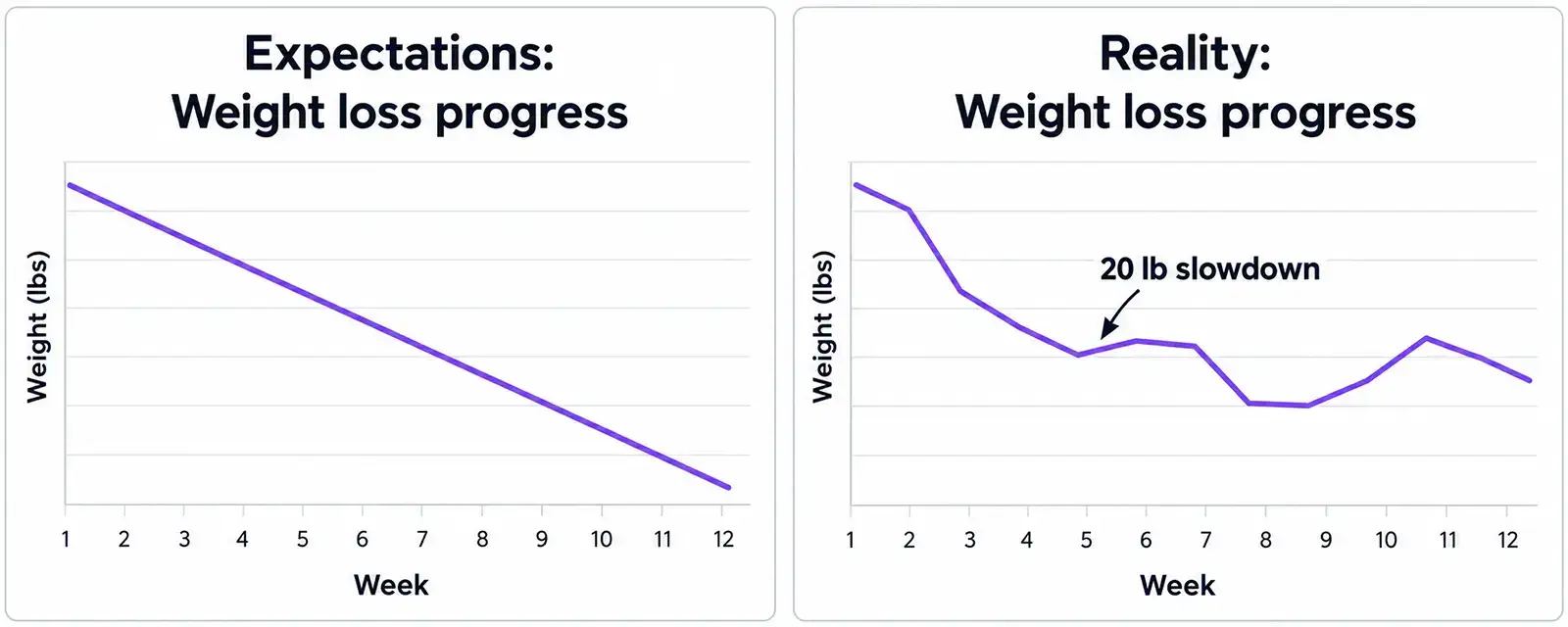
Why Weight Loss Naturally Slows
Weight loss plateaus and short slow downs occur with all diets. Those patients with diabetes or a family history of obesity seem to have early weight loss slow downs. Weight loss is dependent on starting weight, age, gender, medical conditions, and other medications the patient may be taking. The higher the starting weight the greater the weight loss. Men lose faster than women and younger people faster than older ones. For example, a 22 year old man weighing 280 pounds loses faster than a 55 year old woman weighing 150 lbs.
A smaller body generally requires less energy than a larger body. After significant weight loss, resting and non-resting energy expenditure fall. Research also shows that some people develop adaptive thermogenesis, a further reduction in energy expenditure beyond what would be predicted from the change in body size and composition alone.
The size of that adaptive effect varies and is sometimes overstated. A systematic review found evidence of adaptive thermogenesis in many studies, but better-designed studies often showed smaller effects. In practical terms, the important point is that the calorie intake that produced rapid loss at the beginning may eventually produce much slower loss at a lower body weight.
Appetite Control Can Change Over Time
Some patients notice that hunger, cravings or food noise begin to return before the next dose. Others continue to feel full but gradually learn to eat around the medication with calorie-dense snacks, drinks or larger portions.
This is why a plateau review should include appetite and eating behavior, not just the number on the pen. If appetite suppression has clearly weakened, the prescribing clinician can evaluate whether the current medication and dose remain appropriate.
Look for Calories That Quietly Returned
The foods that stop weight loss are not always obvious junk foods. Nuts, nut butter, cheese, olive oil, avocado, salad dressing, alcohol, restaurant portions and frequent protein bars can add substantial calories even when the diet still looks healthy.
A short food record can be useful during a plateau. The purpose is not permanent calorie obsession. It is to find changes that are easy to miss when portions have gradually increased.
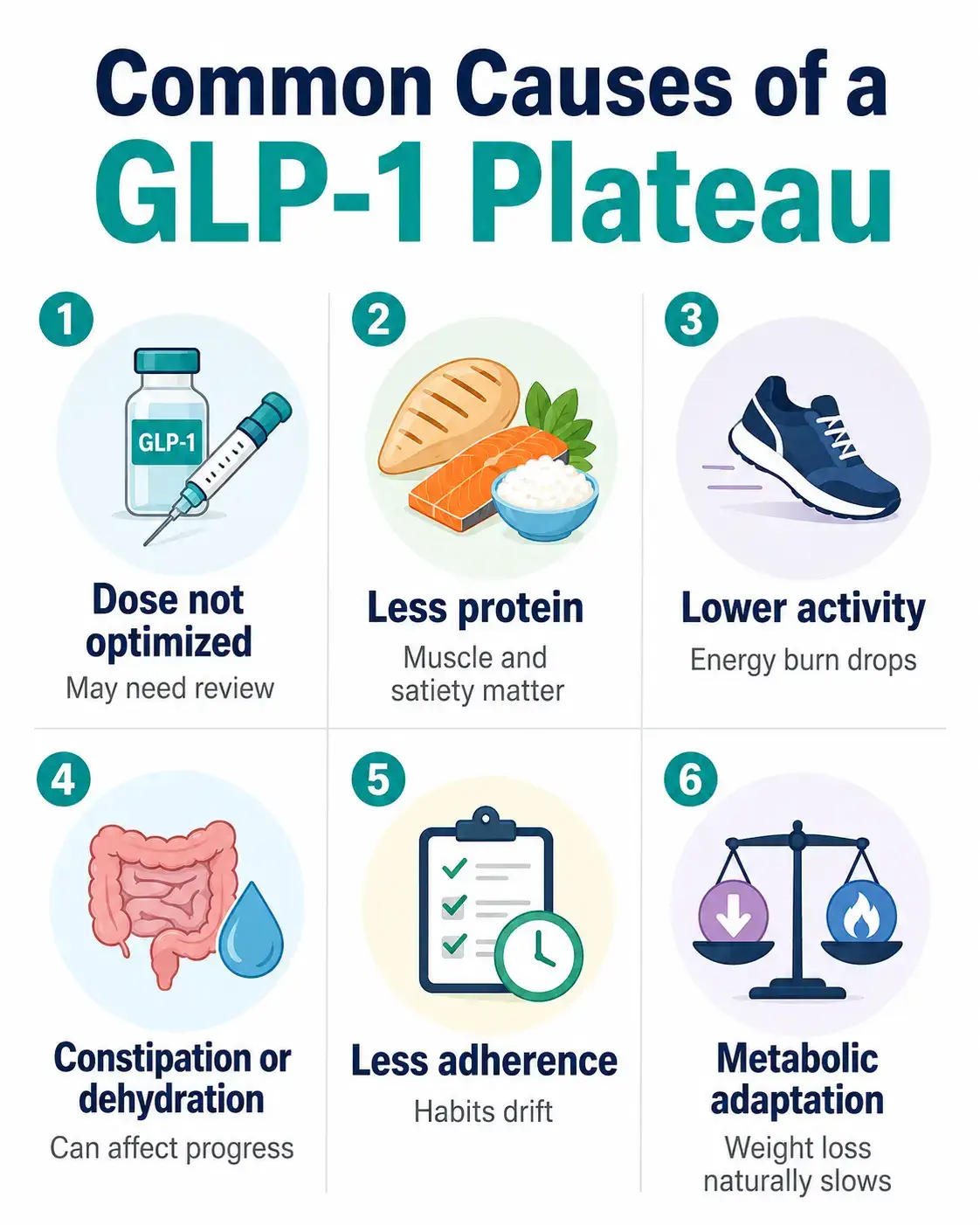
Protect Protein and Muscle
Large weight loss includes some loss of lean tissue. If protein intake is poor and resistance exercise is absent, loss of lean mass can contribute to lower energy expenditure and reduced physical function.
Protein by itself is not enough. Current expert guidance emphasizes combining adequate protein with resistance training. Walking and aerobic exercise are excellent for health, but strength training provides the specific stimulus that helps preserve muscle during major weight loss.
Increase Activity, but Do It Strategically
A plateau is not a reason to suddenly double exercise volume. A better plan is to review both structured exercise and everyday movement. People often move less without realizing it as body weight falls or calorie intake becomes low.
Adding regular resistance training, increasing daily steps, or restoring activity that has gradually disappeared can improve the energy balance without forcing food intake to an unsustainably low level.
Review the Medication, Not Just the Dose
If a patient is tolerating treatment and still has significant hunger, we may consider a dose adjustment within the approved regimen. If the medication has produced a partial response and then a persistent plateau, switching to another obesity medication may sometimes make more sense than simply forcing the dose upward.
There is no good evidence that patients become “immune” to semaglutide or tirzepatide in the way the term is sometimes used online. Likewise, splitting a weekly prescription into creative dosing schedules should not be treated as a routine plateau solution. Medication changes should be individualized by the doctor.
Check for Other Factors That Can Stall Progress
- Constipation or fluid retention that temporarily masks fat loss.
- Sleep loss or untreated sleep apnea.
- Medications that promote weight gain.
- Thyroid or other endocrine problems when clinically suspected.
- Alcohol, liquid calories or increased restaurant eating.
- Very low calorie intake that leaves the patient fatigued and inactive.
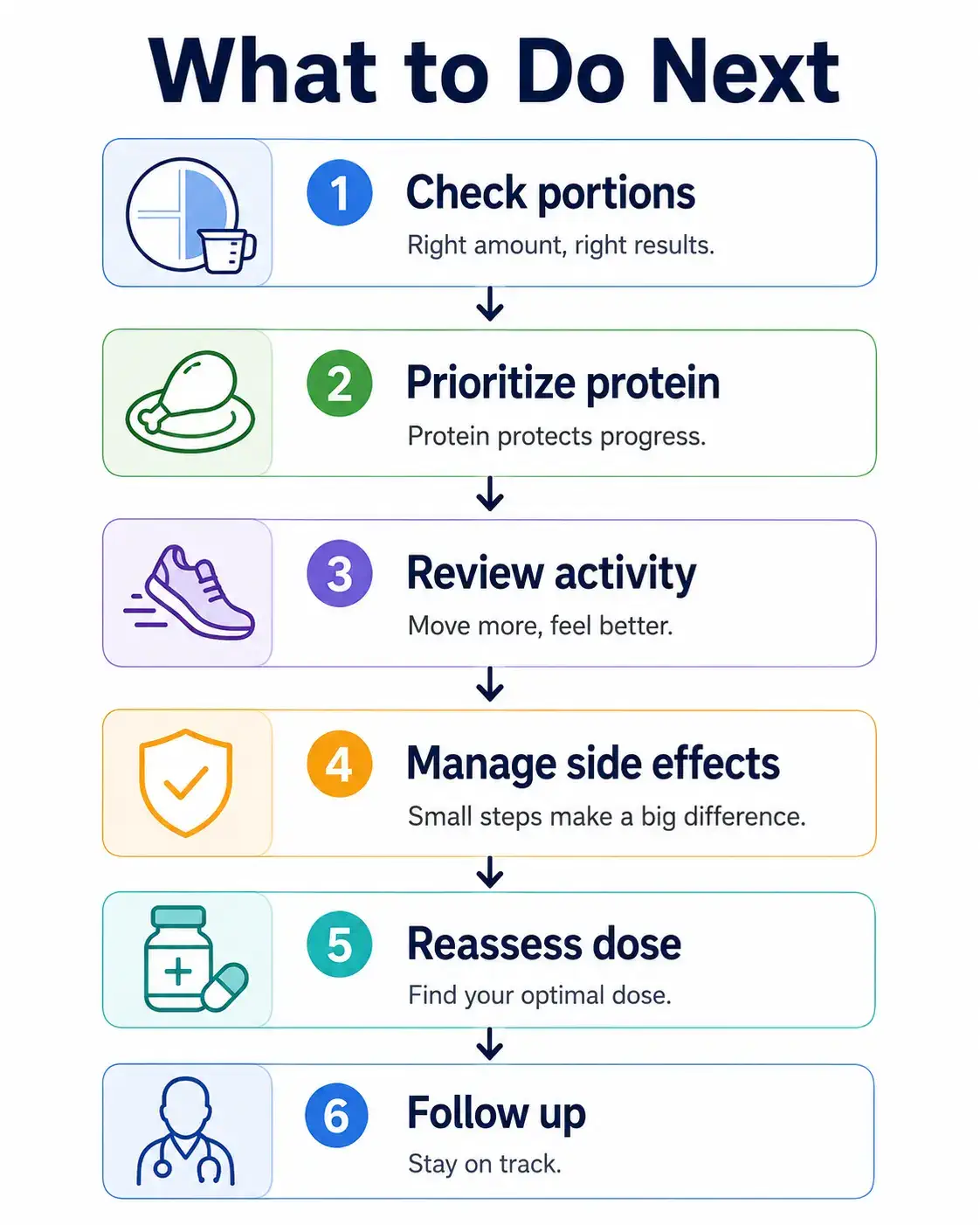
From Dr. Lipman’s Practice
I have dealt with weight-loss plateaus for more than 40 years. The medication has changed, but the basic problem has not. You have to find the reason the energy balance changed instead of assuming the answer is always more medication.
I look at the weight trend, hunger, food choices, protein, activity, side effects, and the current dose. Sometimes the solution is a dose adjustment. Sometimes it is a medication change. Very often there is a food or activity issue that can be corrected without making the treatment more complicated.
A Practical Plateau Checklist
- Confirm that the stall has lasted long enough to be real.
- Review portions and calorie-dense foods for one to two weeks.
- Make sure protein intake is adequate.
- Add or improve resistance training and daily movement.
- Address constipation, sleep and other medical factors.
- Review medication response and tolerability with the prescribing clinician.
Plateaus are frustrating, but they are not unusual and they do not mean the entire treatment has failed. A structured review usually tells you more than an automatic dose increase.
If your weight has stopped moving on semaglutide, tirzepatide, or another GLP-1 medication, Dr. Lipman’s GLP-1 Weight Loss Program includes plateau evaluation, nutrition review and medication adjustment when appropriate.