
Weight regain is common after stopping GLP-1 weight-loss medications, especially when treatment ends without a maintenance plan. The medication is not addictive, but its appetite and satiety effects fade after it leaves the body. At the same time, the biological pressures that favor weight regain after major weight loss are still present.
Clinical trials make the pattern clear. After semaglutide was stopped in the STEP 1 extension, participants regained about two-thirds of the weight they had lost over the following year. In the SURMOUNT-4 tirzepatide trial, people switched to placebo after an initial 36 weeks of treatment regained an average of 14.0% of body weight over the next year, while those who stayed on tirzepatide lost an additional 5.5%.
Why Does Weight Come Back After Stopping?
GLP-1 medications help control several forces that normally make weight loss difficult. They reduce appetite, increase fullness and often quiet cravings or food noise. Once treatment stops, those effects gradually diminish.
The body also adapts to weight loss. A smaller body needs fewer calories, and hormonal and metabolic changes can increase appetite and reduce energy expenditure. These responses are part of the physiology of the weight-reduced state, not evidence that a patient failed.
Stopping Is Not the Same as Withdrawal or Addiction
Semaglutide and tirzepatide do not produce a classic withdrawal syndrome. Patients do not become chemically dependent in the way that term is used for addictive drugs.
What returns is the underlying biology of obesity and appetite regulation. If a medication was suppressing hunger and helping the patient maintain a calorie deficit, removing it can make the same food environment much harder to manage.
How Much Weight Will You Regain?
There is no single percentage that applies to every patient. The STEP 1 extension found substantial average regain after semaglutide withdrawal, but individuals varied. Some regained most of the lost weight, some regained part of it, and some maintained better.
The same is true after tirzepatide. SURMOUNT-4 showed a strong average benefit from continued therapy, but long-term outcomes depend on many factors, including the amount of weight lost, eating habits, physical activity, muscle mass, other medications and what maintenance strategy replaces the original treatment.
Do GLP-1 Medications Have to Be Taken Forever?
For many people, obesity behaves like a chronic disease, and long-term pharmacologic treatment may be appropriate. Both Wegovy and Zepbound are FDA-approved not only to reduce excess body weight but also to maintain weight reduction long term.
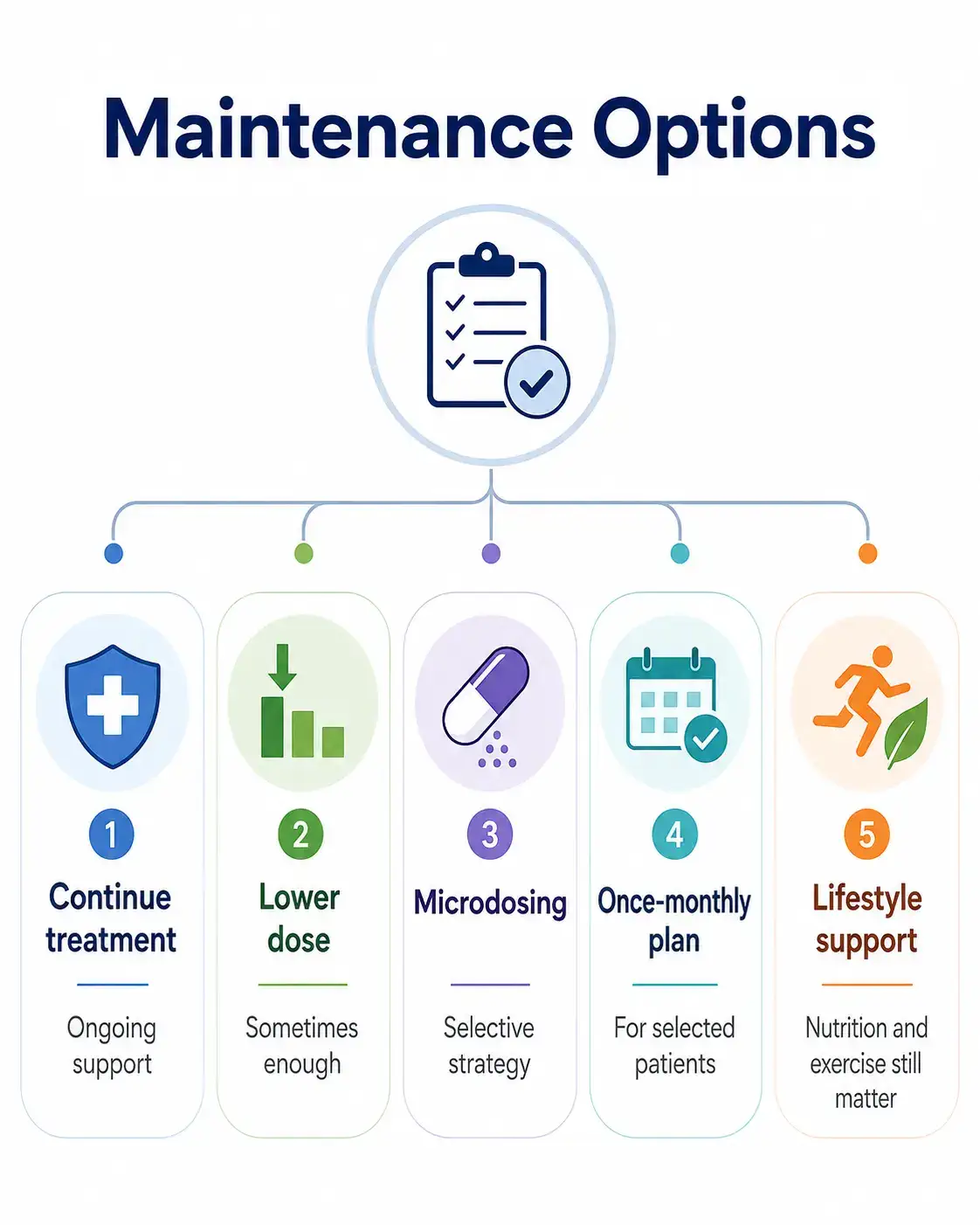
That does not mean every patient must stay on the same drug at the same dose indefinitely. Long-term treatment can include continued maintenance dosing, a change in medication, or a carefully supervised transition to another strategy. The evidence is strongest for continuing medications according to studied and approved regimens.
What About Lower Doses or Less-Frequent Maintenance?
In clinical practice, some physicians use individualized lower-dose or less-frequent approaches after a patient reaches goal weight. Dr. Lipman has used lower-dose and extended-interval strategies in selected maintenance patients.
These strategies should be clearly distinguished from the FDA-approved weekly maintenance regimens and from the large randomized trials, which primarily studied continued standard treatment. However, in my practice, I am finding that once-monthly or microdosed maintenance schedules can be just as effective, and substantially less expensive with fewer/milder side effects, than standard weekly dosing. Still, every patient is unique, so I treat these as individualized medical strategies.
Start the Maintenance Plan Before You Stop
Waiting until the medication is gone and hunger has returned is a poor time to design a maintenance strategy. Planning should begin while the patient is still losing weight.
- Identify a realistic maintenance calorie range rather than returning to pre-treatment portions.
- Keep protein intake high enough to support lean mass.
- Use resistance training and regular activity to preserve muscle and energy expenditure.
- Track weight often enough to catch a regain early, before 5 or 10 pounds becomes 20.
- Decide in advance what will happen if hunger or food noise returns.
What If You Have to Stop Because of Cost or Insurance?
Cost and insurance coverage are major reasons patients discontinue GLP-1 medications. If access may end, contact the prescribing clinician before the final dose when possible. A planned transition creates more options than an abrupt stop after the medication is already unavailable.
Depending on the patient, alternatives may include another approved obesity medication, a different GLP-1 option such as compounded semaglutide or tirzepatide, intensified nutrition support, or another physician-supervised maintenance strategy. The right choice depends on medical history, previous response and what treatments are actually accessible.
What If You Stop Because of Side Effects?
Stopping completely is not always the only option. Some patients can continue successfully after a dose reduction, slower titration, transitioning to monthly or microdosing schedules, or treatment of a specific gastrointestinal problem. Others do better after switching medications.
Severe or medically significant adverse reactions are different. When a clinician recommends discontinuation for safety reasons, the priority is treating the medical problem first and then choosing an appropriate alternative.
From Dr. Lipman’s Practice
I consider maintenance part of the weight-loss treatment from the beginning. Getting a patient to goal weight and then saying “good luck” is not a complete plan. The patient needs to know what dose or medication strategy comes next, what eating pattern they can maintain, how much protein they need, and what we will do if hunger or weight starts to return. The earlier we respond to regain, the easier it is to control.
The Bottom Line
Stopping a GLP-1 medication does not guarantee that all the weight will return, but substantial regain is common enough that it should be expected and planned for. The strongest trial evidence supports ongoing treatment for maintaining the full effect of semaglutide or tirzepatide.
If stopping is necessary or desired, do it with a maintenance strategy rather than treating the last injection as the end of treatment. Long-term weight control is a separate phase of care and deserves the same attention as losing the weight in the first place.
Dr. Lipman’s GLP-1 Weight Loss Program includes long-term maintenance planning for patients using semaglutide, tirzepatide, and other weight-loss medications.