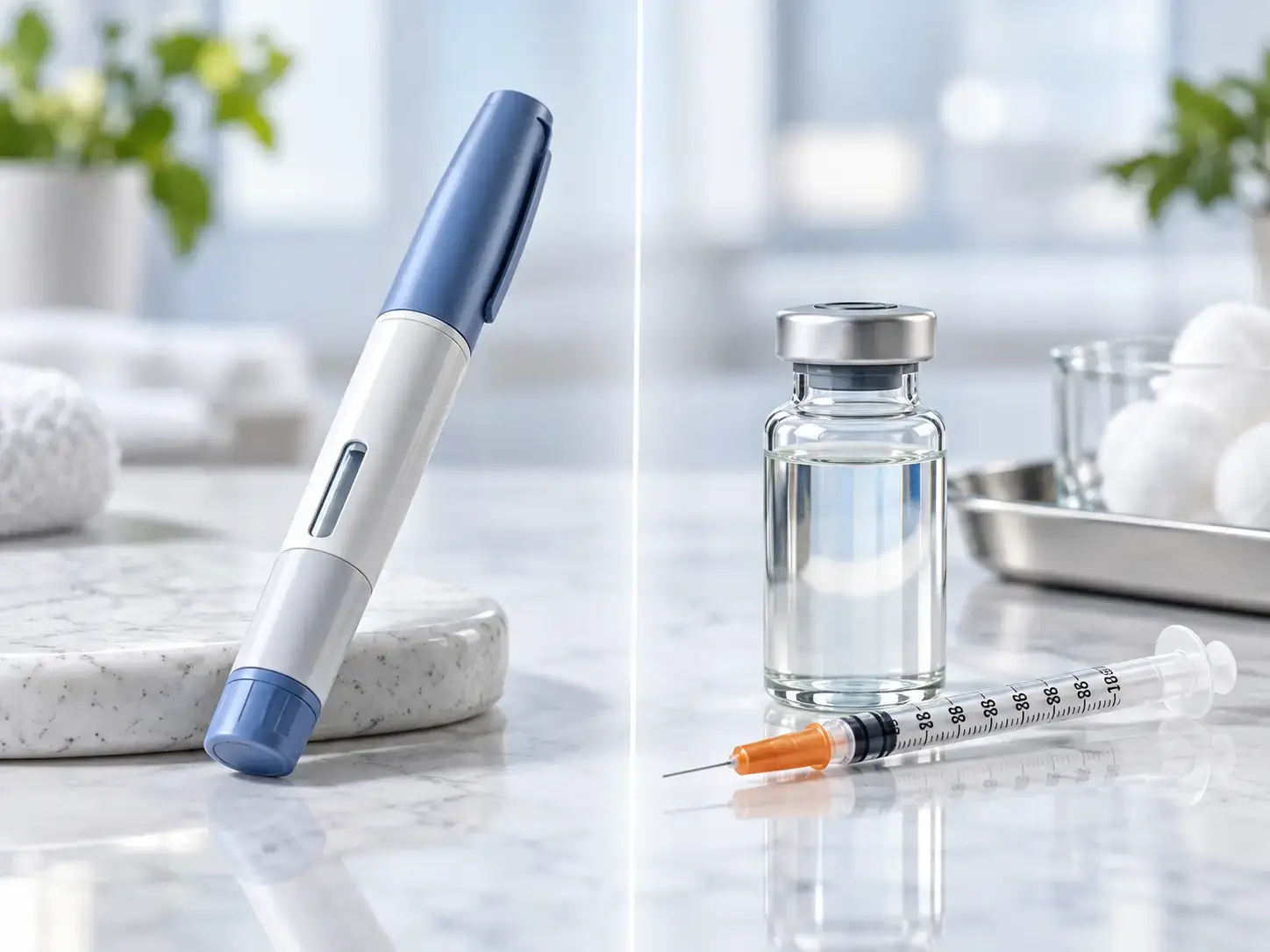

GLP-1 medications generally produce more weight loss than phentermine, but phentermine is not obsolete. The two treatments work differently, cost very different amounts, have different side-effect profiles and can fit very different patients.
Semaglutide and tirzepatide have changed obesity treatment because they can produce double-digit percentage weight loss in many patients and can be used for chronic weight management when indicated. Phentermine is an older stimulant-type appetite suppressant that is inexpensive, fast acting and easy to individualize, but its FDA label is for short-term use.
The Main Difference: How They Control Eating
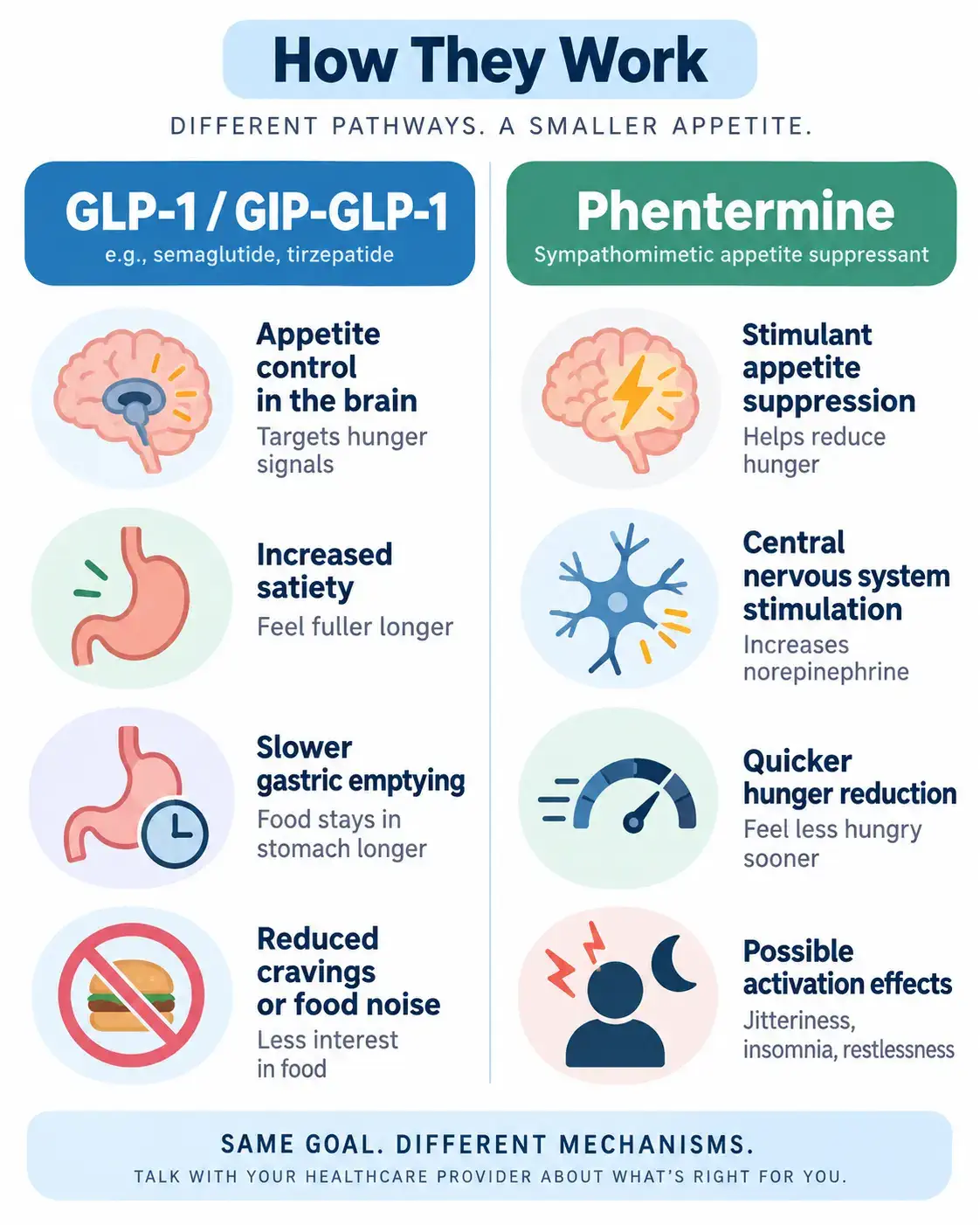
Phentermine is a sympathomimetic amine. It suppresses appetite through central nervous system stimulation, largely through norepinephrine-related pathways. Patients often notice reduced hunger quickly, but some also notice insomnia, dry mouth, jitteriness, anxiety or an increase in heart rate.
Semaglutide and tirzepatide work through incretin pathways. They affect appetite and satiety signals in the brain, slow gastric emptying and influence glucose regulation. Tirzepatide activates both GIP and GLP-1 receptors. These medications often reduce not only hunger but also cravings and persistent thoughts about food.
Which Produces More Weight Loss?
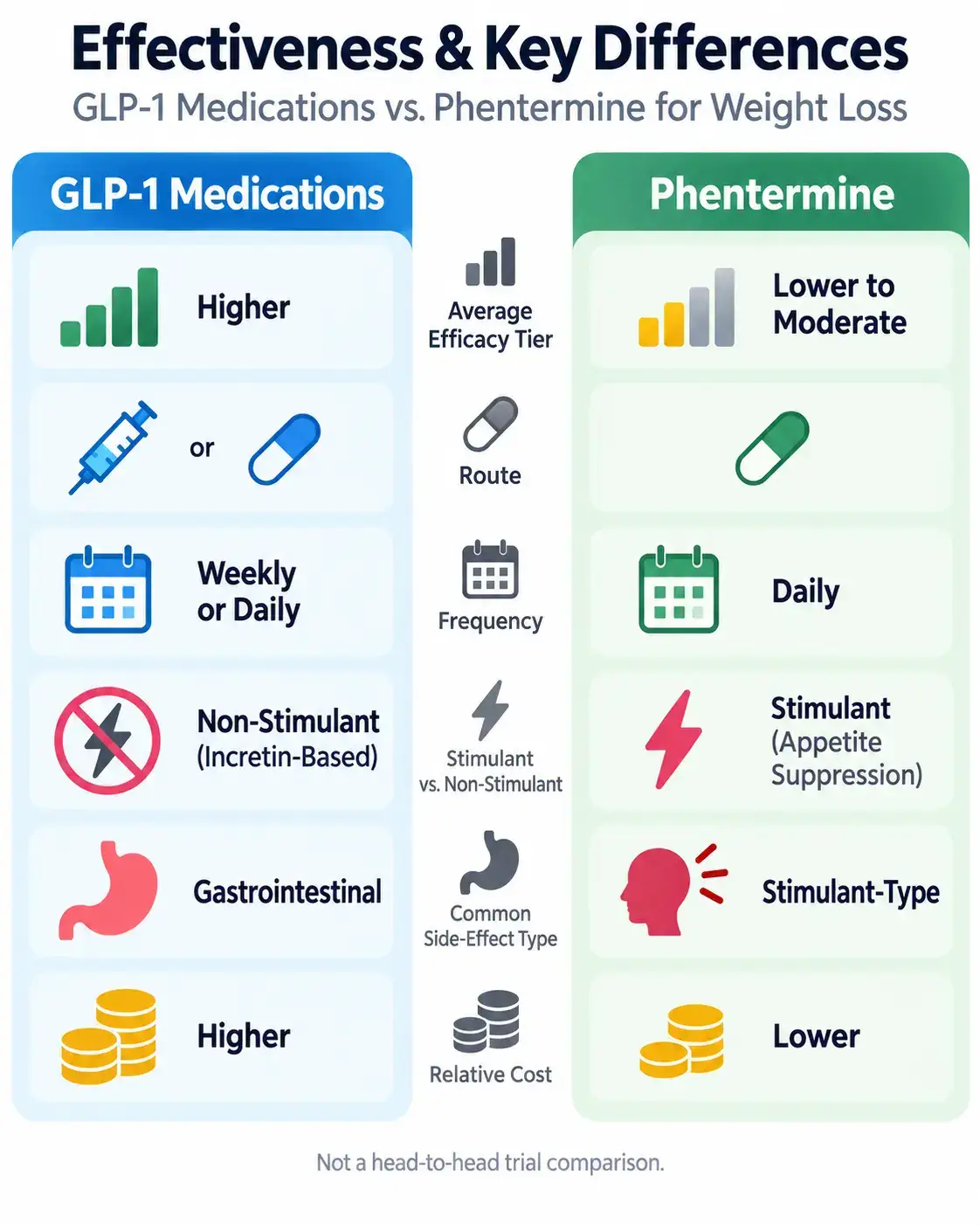
For average weight reduction, the modern incretin medications are stronger. Semaglutide obesity trials have produced average weight loss in the mid-teens, while tirzepatide trials have reached roughly 20% or more at higher maintenance doses. Newer comparative evidence and clinical guidelines place semaglutide and tirzepatide among the most effective obesity medications currently available.
Phentermine can still produce clinically meaningful weight loss, but the evidence base is older and much of the FDA labeling reflects short-term treatment. A large real-world cohort published in 2019 found that longer-term phentermine users lost more weight than short-term users without an observed increase in cardiovascular disease or death among low-risk patients, but that was an observational study rather than a randomized long-term cardiovascular trial.
Why Phentermine Still Has a Role
Cost is the obvious advantage. Generic phentermine is inexpensive compared with branded GLP-1 medications, and insurance coverage for obesity drugs remains inconsistent. It can also be useful for a patient who wants an oral medication, has a pattern of daytime hunger that responds well to a stimulant appetite suppressant, or previously had a good response to phentermine.
It is also relatively easy to individualize by dose and timing. That has been part of medical weight-loss practice for decades.
Where GLP-1 Medications Have the Advantage
GLP-1 and GIP/GLP-1 medications produce greater average weight loss, are designed for ongoing chronic treatment when indicated, and do not rely on stimulant effects. They also have benefits beyond the scale in selected patients, including glucose control and specific cardiovascular or sleep-apnea indications depending on the product.
For patients with substantial obesity, strong food noise, type 2 diabetes or a need for larger sustained weight reduction, semaglutide or tirzepatide will often be the more powerful option.
Side Effects Are Different, Not Simply Better or Worse
Phentermine side effects are more likely to involve stimulation: insomnia, dry mouth, restlessness, increased heart rate or elevated blood pressure in susceptible people. Its label lists cardiovascular disease, uncontrolled hypertension, hyperthyroidism, glaucoma, pregnancy, agitated states and certain other conditions as contraindications.
GLP-1 side effects are primarily gastrointestinal. Nausea, constipation, diarrhea, reflux, vomiting and abdominal discomfort are common, especially during dose escalation. The prescribing information also includes important warnings and contraindications that have to be reviewed before treatment.
What About Long-Term Treatment?
This is an important distinction. FDA-approved semaglutide and tirzepatide obesity products are intended for chronic weight management. Phentermine monotherapy remains labeled as a short-term adjunct, even though some obesity specialists prescribe it longer off-label in carefully selected patients.
The 2026 American College of Physicians living guideline recommends semaglutide and tirzepatide as first-line pharmacologic options for adults with obesity when medication is appropriate. That does not make phentermine useless. It reflects the strength of the newer evidence and the magnitude of average weight loss.
From Dr. Lipman’s Practice
I have prescribed phentermine and related appetite suppressants for decades. It remains useful because it is inexpensive, acts quickly and can be adjusted to the patient. I do not discard a medication that has worked well for someone simply because a newer drug exists.
At the same time, semaglutide and tirzepatide have changed what is possible for patients who need to lose a large amount of weight. They usually provide stronger appetite and food-noise control without the stimulant feeling of phentermine. The decision should be based on medical history, eating pattern, previous response, side effects, weight-loss goal, cost and access rather than assuming every patient needs the newest drug.
Which Is Better for You?
If maximum average weight loss is the priority and there is no contraindication, a GLP-1 or GIP/GLP-1 medication usually has the advantage. If affordability, oral dosing or a known previous response to phentermine matters more, phentermine may still be a reasonable option for an appropriate patient.
The best choice is the medication that fits the patient well enough to produce meaningful weight loss without creating side effects, cost problems or adherence problems that make the plan unsustainable.
Dr. Lipman evaluates both newer GLP-1 medications and established weight-loss medications when building an individualized treatment plan rather than forcing every patient into the same prescription.