

ez-toc]
GLP-1 Injections vs Phentermine for Weight Loss: Benefits, Risks, and Results Compared
Dr. Richard Lipman MD
Board-Certified Internist and Endocrinologist

Phentermine and Its Analogs: The First Effective Weight Loss Medications
Best diet pills/medications are based on safety, effectiveness and lack of side effects. In Miami, FL, for 2026, there are many choices. Each weight loss medication works on different areas of the body to control appetite, cravings, and fullness. There are many methods to choose the best medication for each individual. This maximizes weight loss while minimizing side effects and ensures fast, safe, and healthy weight loss. Among the best diet pills and most effective oral medications are the phentermines,.. The phentermines have a long safety record and are among the most effective. All of these drugs work by suppressing food noises in the brains of obese individuals, resulting in consuming fewer calories
Compare GLP-1 Injections Weekly with Best Diet Pill/Medication on Video:
A second group of anorectic drugs, similar but milder than phentermine, is the diethylpropion group. It consists of 2 preparations: short-acting diethylpropion (25 mg) and the extended-release version(tenuate, 75 mg). This group acts similarly to the phentermines with fewer side effects and probably slightly less effectiveness. Alternate and less effective weight-loss medications include Topiramate, Contrave, Xenical,
Importance of FDA Classification and Approval for Weight Loss Medication
Currently 2/3 of adults and 1/3 of children in the US are overweight or obese. Therefore, there is great pressure on Food & Drug Administration and the healthcare community—physicians and pharmaceutical companies alike—to develop new effective and safe treatments.
Benefits vs. Risks
The heart of all FDA medical product evaluation decisions is a judgment about whether a new product’s benefits to users will outweigh its risks. No effective product is totally risk or side effect free, so these judgments are important. Review side effects of weight loss medications such as mild insomnia. rare skipped or irregular heart beats and dry mouth.
Almost all oral medications become DEA controlled substances once the FDA approves them. There are several weight loss medications that are not controlled drugs including Contrave (a combination of wellbutrin(buproprion) and naltrexone, Plenity, Orlistat (Xenical), Topamax and Metformin and more recently Wegovy and Zepbound. Unfortunately, there are no FDA approved, effective drugs for weight loss that are Over the Counter, nor are any weight loss supplements proven to be effective.
Diet Medications: FDA Approval and Classification
Medications Producing Weight Loss by Novel Mechanisms: (Not necessarily by appetite suppression)
There are several FDA-approved medications that assist in weight loss by novel mechanisms NOT associated with appetite center stimulation, such as Metformin, Topamax, Orlistat, Naltrexone, and most recently , Wegovy. Mounjaro. These medications have little to NO central nervous system stimulation.
Metformin: The most interesting of these is Metformin, which is used in diabetics to control blood sugar. Metformin also improves metabolism. Metformin has been available for more than 20 years, is safe, is not a stimulant and can be taken indefinitely.
Recent studies suggest that, in addition to limiting cravings, metformin’s reduction of sugar and insulin release leads to less fat formation and thus weight loss. In a recent study of 154 non-diabetic subjects, weight loss averaged 12 lbs over the 6-month study. The authors concluded that “metformin was an effective drug to reduce weight in a naturalistic outpatient setting in insulin-sensitive and insulin-resistant overweight and obese patients.” Another study found significant weight loss in many overweight adolescents.
Orlistat: Orlistat (OTC version Alli) and the brand-name medication Xenical work completely differently from other weight-loss medications. It inhibits pancreatic enzymes responsible for the digestion of fats, permitting the fats to pass out through the gastrointestinal tract and thus reducing calories.
Topamax: Topamax is an older FDA-approved medication used for seizures and migraine headaches. It can be taken alone or, more commonly, with the prescription weight-loss medication Qsymia.
Naltrexone: Another FDA-approved medication that has been used to reduce alcohol consumption and cravings for sweets, resulting in reduced calories, is Naltrexone. Naltrexone has been on the market for more than 20 years. It’s a very safe and effective medication, especially for alcohol over-consumption. It works by blocking the opioid receptors in the brain, which are activated by alcohol. Many individuals note a reduction in the need for sweet and salty comfort foods when taking Naltrexone. In high alcohol drinking areas, like Miami Beach this drug is very popular. down[pdf-embedder url=”https://clients.hylidix.com/rlmd/wp-content/uploads/2025/09/Oral-Weight-Loss-mediations.pdf” title=”Oral Weight Loss mediations”]
Weight Loss Medications Acting on the Brain Appetite Centers
The FDA has tightly regulated the market for weight-loss medications. The vast majority of medications are not only prescription drugs, but also DEA-controlled substances because of their effect on the brain. The DEA classifies these drugs into five categories, or schedules: I, II, III, IV, and V. From the DEA:
Drugs, substances, and certain chemicals used to make drugs are classified into five (5) distinct categories or schedules depending upon the drug’s acceptable medical use and the drug’s abuse or dependency potential. The abuse rate is a determining factor in the scheduling of the drug; for example, Schedule I drugs have a high potential for abuse and the potential to create severe psychological and/or physical dependence. As the drug schedule changes– Schedule II, Schedule III, etc., so does the abuse potential– Schedule V drugs represents the least potential for abuse.
The diet medications Qsymia, phentermine (including Lomaira), diethylpropion, and phendimetrazine are Schedule IV drugs. This means there is little to no abuse or dependency potential. A cough medicine containing small amounts of codeine would fall under Schedule V. There is minor suppression of food noises with phentermine and naltrexone through hypothalamic pathways.
Narcotic pain medications such as oxycodone and fentanyl, as well as amphetamine-based ADHD drugs such as Adderall and Ritalin are in Schedule II. There are several prescription medications including Contrave, and Wegovy that are not controlled medications.
Injectable Semaglutide and Tirzepatide Medications- GLP-1’s
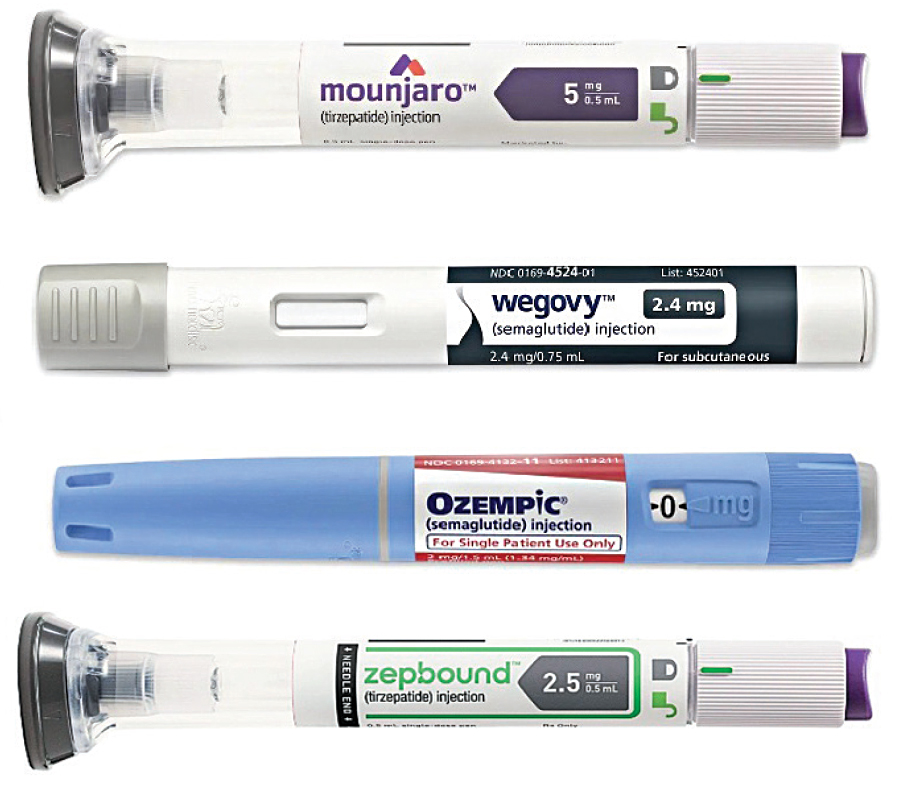
Ozempic, Wegovy, Mounjaro, and Compounded Semaglutides: Wegovy, Zepbound, and Mounjaro are the newest weight-loss medications. It falls into a group of GLP-1 medications that were first used for diabetics. A side effect of the drug was unexpected weight loss. Given as a once-a-week injection, they produce the greatest weight loss, up to 20% of the starting weight. Side effects are limited to mild nausea and other GI symptoms. Most of the weight loss in these groups is attributable to the marked reduction in food noises and subsquent intake, which is considered the most significant contributor to obesity.
Weight Loss Effects of the GLP-1 Medications
The weight-loss effect is due to its direct action on the brain’s appetite center and on the stomach, which delays gastric emptying. A similar, but more potent drug is Mounjaro, which produces greater weight loss with fewer side effects because it consists of two hormones. These drugs form the class of Semaglutides, which affect appetite centers, insulin, and glucose release, and stomach fullness. Even more recent have been the release of Compounded semaglutides–compounded versions of Ozempic/Wegovy and Mounjaro which act as a generic equivalent. The newest FDA approved weight loss drug is Zepbound.
- There are NO FDA-approved prescription weight loss medications in over-the-counter (OTC) drug or supplement groups.
- There is only a single approved nonprescription medication for weight loss. It is called is Alli (Orlistat). Unfortunately, it is not very effective. Xenical is the prescription strength version of Orlistat.
- Wegovy, Xenical and Contrave are the only FDA-approved prescription weight loss medications that are not DEA controlled drugs.

Best Prescription Weight Loss Pills: Do I Qualify for Medication?
Weight loss pills are all medications requiring a prescription from a physician. Weight loss drugs may be an option for you if:
- You are obese (BMI of 30 or higher)
- You are overweight (BMI of 27 or higher) with serious health risks, such as high blood pressure, type 2 diabetes, or high cholesterol, and cannot control your weight with diet and exercise alone.
- Other medical conditions are present, such as sleep apnea, severe arthritis, and even depression.
Try our simple BMI calculator to discover your Body Mass Index
These BMI thresholds reflect a recommendation that individuals be treated when their body weight was at least 20% above “desirable weight” based on Metropolitan Life Insurance data from 1983. A BMI of ≈27 for men and women corresponded to being 20% above desirable weight and was associated with increased risks for hypertension (high blood pressure), hypercholesterolemia (high cholesterol), and diabetes mellitus, as well as premature death.
How to Determine Best Weight Loss Pills/Medications for You
Many factors go into the process of deciding which are the best weight loss pills for you. Assuming your weight and/or medical problems indicate the possible need for these medications, your medical history is the first place to start. This includes current medical problems, medications, past history of medical problems, and previous reactions to medications. Here are the is what you need to consider to find the best prescription diet pill for you:
1. Medical history that excludes use of prescription weight loss drugs:
Conditions include uncontrolled hypertension, heart failure, history of cardiovascular disease (heart attacks, TIA’s, strokes), terminal cancer, hyperthyroidism, and some cases of glaucoma.
2. Concurrent medications that exclude the drugs (Qsymia, Wegovy or Contrave):
MAO inhibitors, seizure medications, a history of allergy to any of these medications, or you are currently taking similar medication or one of the two components in Qsymia or Contrave. Dilantin, SSRI’s, methadone and opioid medications should not be used with Contrave or Qsymia. Wegovy should not be used with insulin.
3. Past History of Successful Weight Loss Attempts with a Weight Loss Medication, or Unpleasant Side Effects
Your past attempts at weight loss with medications, successful or not, are often ignored when deciding the best weight loss pills for you. Older weight loss medications (diethylpropion and phentermine) have been on the market for more than 50 years, and the components of Qsymia and Contrave for almost equally as long. Your past responses, both positive and negative can help you make the best choice.)
Successful weight loss in the past with phentermine or diethylpropion might suggest trying these medications again at different dosages. It may also suggest Qsymia as a possible alternative. If you have been treated with bupropion (Wellbutrin) for anxiety or depression and noticed weight loss, you might consider Contrave. If you responded well to Zyban (a version of bupropion) and stopped smoking, you might also consider Contrave. Some dieters can lose up to a lb a day in the beginning.topped smoking, you might also consider Contrave. Some dieters can lose up to a lb a day in the beginning.
4. Your Age and Gender Often Help Decide the Best Weight Loss Pills:
Overweight and obese younger people (teens to mid-twenties) of both sexes and men who require weight loss medications but have never taken any of the older weight loss medications seem to do better when they take a single dose of the lowest dose medications in the morning. Older teens and men respond well to low dose phentermine or Tenuate, especially when the dosing is early in the morning and only once a day. Phentermine has been suggested to reset metabolism to higher levels.
5. Your Tolerance (or Intolerance) for Side Effects Helps Determine Your Best Weight Loss Pills:
All of these medications have some side effects. Most are transitory and mild. However, everyone responds differently and side effects are unpredictable. In addition, everyone has a different tolerance for side effects. In general, Qsymia has the most side effects and at the same time is probably the most effective. Contrave has fewer side effects and is far less effective. Side effects fall into several groups:
- Insomnia, stimulation, anxiety: Typical of the older drugs like phentermine. Less frequent with diethylpropion. Not a problem with Lomaira 8mg.
- Somnolence and fatigue: Not seen in the older weight loss drugs. Most commonly experienced with Qsymia
- Tingling of fingers, memory problems: Seen only Qsymia because of the topiramate component.
- Gastrointestinal issues, including nausea and (rarely) vomiting: Only in Contrave due to the naltrexone component.
- Headache: Possible with all of the medications. Usually transient and tolerable. Responds to extra strength Tylenol.
- Nausea, stomach symptoms: see mostly with semaglutides Wegovy and Ozempic
6. Your Eating Patterns Help Determine the Best Weight Loss Pills for You:
You may be overeating for many reasons. Often, trying to analyze what, when, and how much you eat can help you decide on the best treatment. Here are several types of eating patterns and the medication that might be the best to consider:
- Compulsive Over-eater
A compulsive over eater is an individual who compulsively eats but does not purge and usually becomes overweight. The over eater may eat three meals a day plus frequent snacks. He or she thinks of food all day long. This person may overeat continually throughout the day rather than consume large amounts of food during intermittent binges. They tend to get stuck on the thought of food and feel compulsively driven. He or she tends to be a night time eater and typically claims to have no control over food. Often they worry and have difficulty falling asleep. This behavior has been associated with low levels of serotonin. Caffeine and older diet pills often make them anxious. The best weight loss pills for people in this category is often Qsymia (as long as they can tolerate the phentermine component) . - Impulsive Overeating
An impulsive eater has poor impulse control and reaches for food often when he or she is not hungry and without thinking. They do well when they see healthy foods but have a hard time controlling urges when exposed to unhealthy foods. This is often seen in untreated ADHD. He or she has great difficulty adhering to a diet plan. This person will reach for the last piece of cold pizza slowly because it’s in front of them. Impulsive eaters usually reach for unhealthy food. The impulsive eating can occur day or night and is often unpredictable. The best weight loss pills for people in this category can be phentermine, diethylpropion, or Qsymia. - Sad, Emotional, Anxious, or Depressed Overeating
Over-eaters with these emotional problems often overeat to calm down because they are depressed or sad. They often have depression and low self esteem. They will have feelings of negativity and hopelessness. The best weight loss pills for people in this category is often Contrave because of the effect of bupropion on depression. - Overeating is Associated with High Alcohol Consumption
Over eaters that are drinking 2 or more alcoholic drinks daily or almost daily can do very well with Contrave. This is especially true if there are elements of compulsive behavior and depression, and if the alcohol triggers increased appetite and lowering of inhibitions. The centers in the hypothalmus that control alcohol and food (especially carb) cravings are very close together.
Table of Prescription Weight Loss Medications
| Wegovy, Ozempic | Qsymia | Tirzepatides | |
|---|---|---|---|
| Medication | Semaglutide | Phentermine and Topiramate | Mounjaro and Zepbound |
| Action | Decreases appetite, cravings while increasing satiety by direct action on brain appetite center | Increases multiple chemicals throughout the brain to reduce hunger and cravings, and produce fullness | 2 hormone system decreases appetite and cravings acting on brain |
| % of Subjects losing > 5% Body Weight | 88% | 66% | 90% |
| Dosage | 1 injection a week | 4 dosages increasing over 3 months – 1 capsule per day | 1 injection a week |
| Time to achieve Effective Dose | 3-4 weeks | 10-14 days | 3-4 weeks for full effect |
| Side Effects (see individual drugs) | nausea | Most due to side effects of topiramate and/or phentermine | Nausea, headache – self-limited, uncommon |
| Safety | Very safe | Pregnancy risk, otherwise safe | Very safe |
| Best For | Can tolerate nausea as side effect, wants to avoid stimulating drugs | Willing to tolerate side effects to get fastest weight loss. Easy to individualize dosage. Use limited by side effects. | People with depression, history of cravings, heavy alcohol consumption. Dosage can be individualized. |
| Special Precautions | Few | Do not take if pregnant, nursing, or planning to become pregnant. People with heart disease and seizures should not take this medication. | Cannot take with SSRI’s or opioids |
Want to Read More About These Medications?
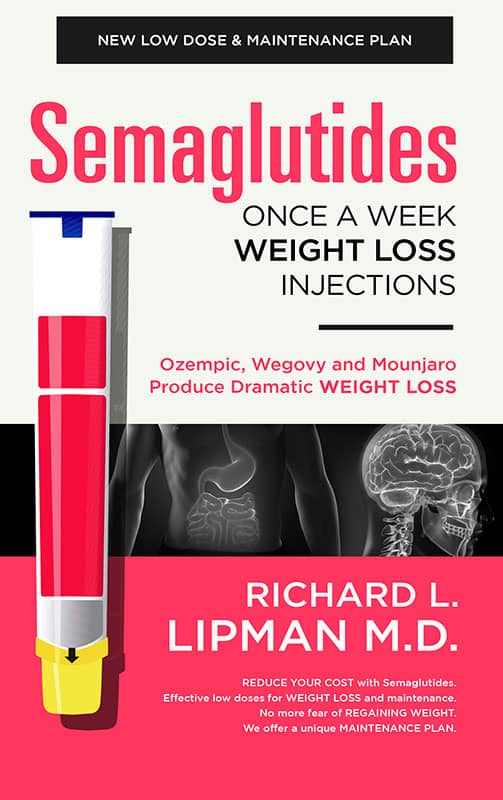
The newest medications are Semaglutides, which consist of 1 or 2 hormones: Ozempic, Mounjaaro, Wegovy, and most recently Zepbound. These medications are given by a once-weekly injection and can produce up to 25% weight loss in a few months.
Call 305-670-3259 to Make an Appointment with Dr. Lipman in his Miami Office
Common Weight Loss Medications

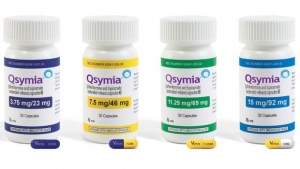
Qsymia is a new weight loss drug that combines two older drugs, phentermine and topamax. This is an effective drug, especially for those with compulsive eating those needing control of appetite. It has substantial benefits for individuals who have a great deal of weight to lose and are willing to take the drug for long periods of time. Multiple doses make individualization easier than most other weight loss medications.
Contrave is the third in the recent wave of new weight loss medications. Similar to Qsymia, it is a combination of two older medications. However, neither naltrexone or bupropion are weight loss drugs. The combination of these two medications act in the brain to reduce cravings and appetite. Clinical studies of this drug have demonstrated 10% – 20% weight loss.