The best diet on a GLP-1 medication is not a special list of magic foods. The priorities are simpler: eat enough protein, choose nutrient-dense foods, keep portions smaller, limit foods that worsen gastrointestinal symptoms, and avoid letting a reduced appetite turn into poor nutrition.
GLP-1 medications make it easier to eat less by reducing appetite and increasing fullness. That is useful, but it creates a new problem: when you can only eat a limited amount, the quality of those calories matters more. Protein, vitamins, minerals, fiber and hydration need to fit into a smaller amount of food.
Start With Protein
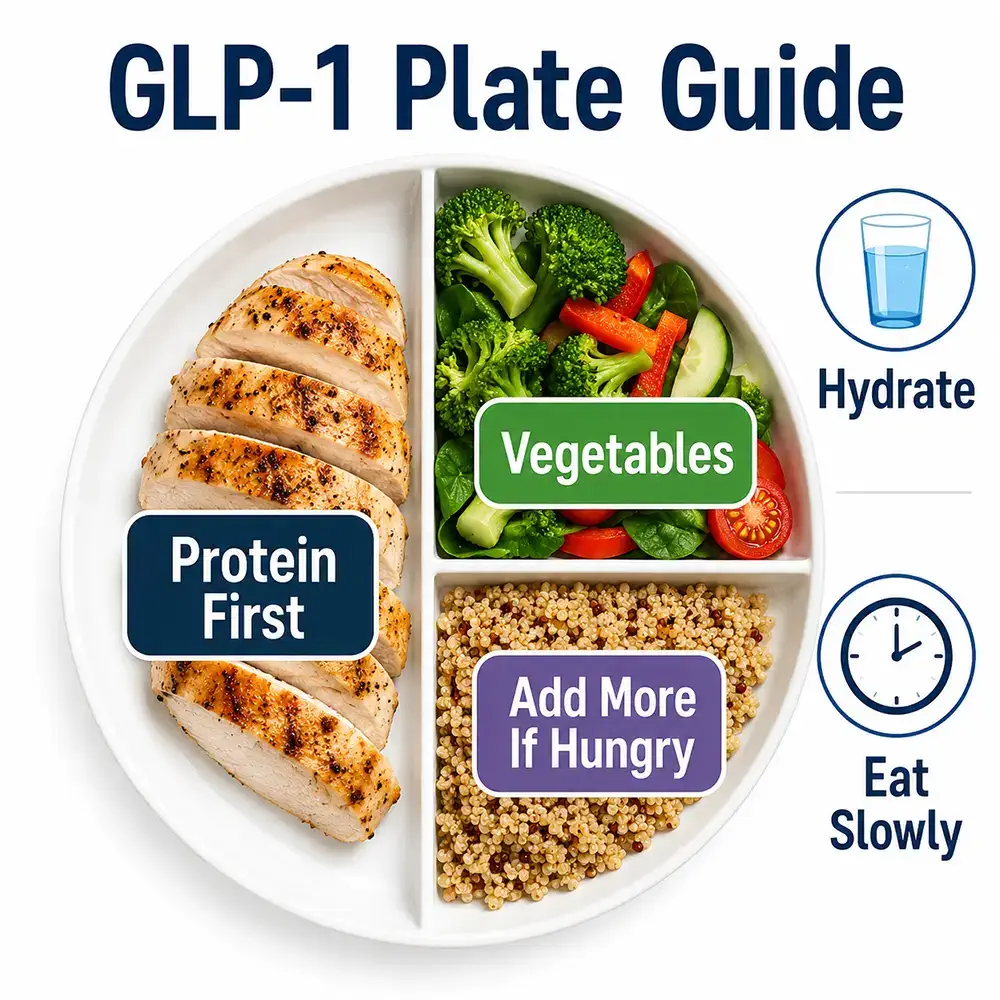
Protein should usually be the first priority during active GLP-1 weight loss. Major weight loss includes some loss of lean tissue as well as fat. Adequate protein, combined with resistance exercise, helps support muscle preservation.
Dr. Lipman has long used a high-protein, lower-carbohydrate approach with weight-loss medications. In appropriate adults, he often aims for roughly 90 to 100 grams of protein per day or more, but there is no single target that is right for everyone. Body size, age, kidney function, activity level, total calorie intake and medical conditions all matter.
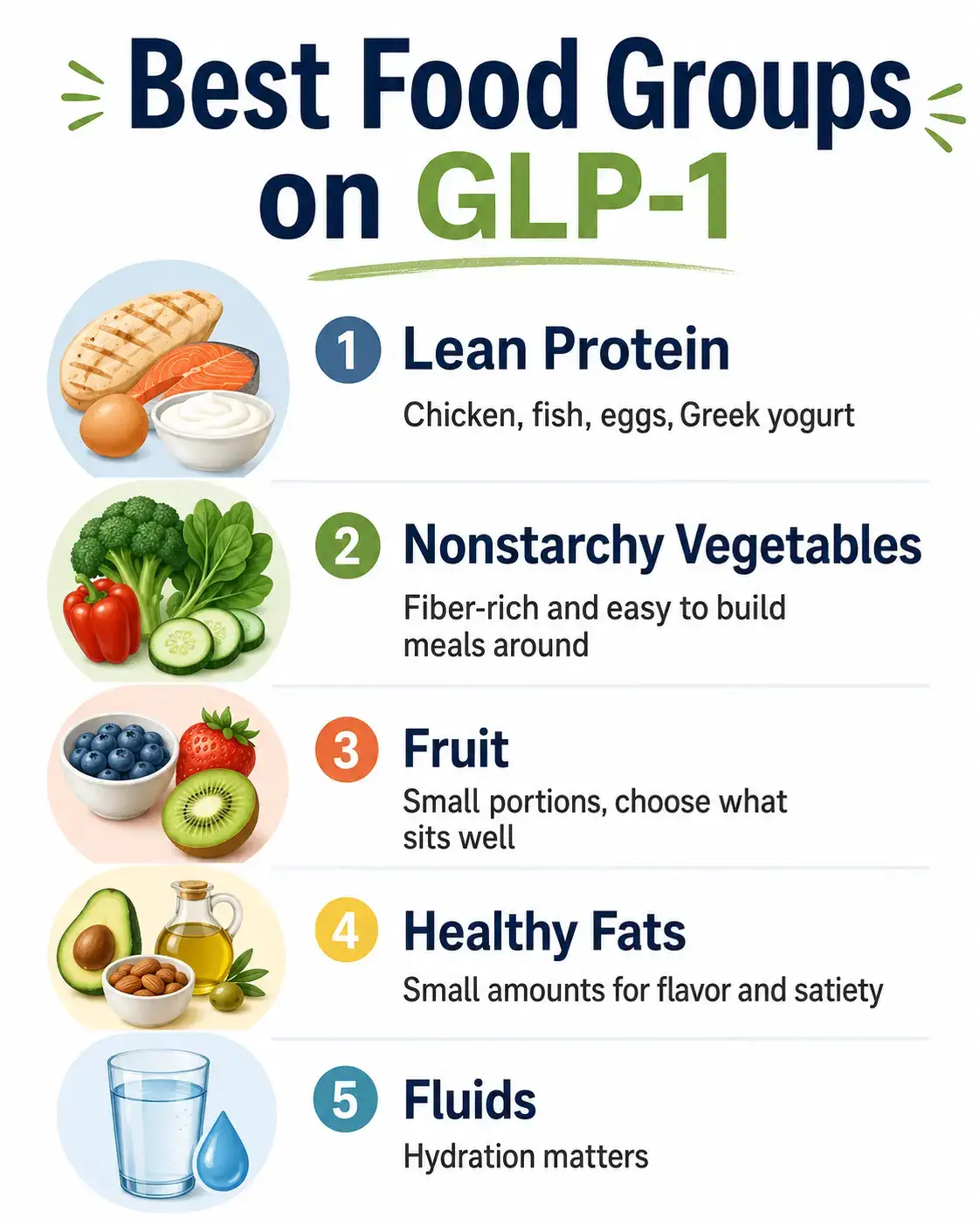
Useful protein choices include eggs, Greek yogurt, cottage cheese, fish, chicken, turkey, lean meats, tofu, tempeh and other protein-rich foods that the patient tolerates well. Protein shakes or bars can be convenient when appetite is low, but they are tools rather than requirements.
Why Protein First Works Well on GLP-1 Therapy
Early fullness can arrive quickly. If a patient starts a meal with bread, chips, salad or a large volume of low-protein food, there may be little appetite left for the protein that is harder to replace later.
A simple strategy is to eat the protein portion first, then vegetables and other foods according to hunger. This is not a rule that every meal must follow, but it is an effective way to protect protein intake when portions are small.
Choose Vegetables and Fiber You Tolerate
Vegetables provide fiber, potassium, folate and other nutrients that become important when total food intake drops. Cooked vegetables may be easier to tolerate than very large raw salads when fullness or bloating is a problem.
Fiber also helps with constipation, but adding a large amount suddenly can make bloating worse. Increase fiber gradually and pair it with adequate fluid. Patients with persistent constipation should discuss the problem with their clinician rather than continually adding more fiber without a plan.
What About Carbohydrates?
You do not have to eliminate every carbohydrate to lose weight on a GLP-1 medication. The more useful distinction is between foods that provide nutrition and foods that add calories quickly without much satiety.
Dr. Lipman generally limits large portions of rice, pasta, potatoes, bread, sweets and refined snack foods during active weight loss. Smaller portions of fruit, beans, whole grains or starchy vegetables can fit when they work with the patient’s calorie and carbohydrate goals.
For patients who prefer a lower-carbohydrate plan, the medication often makes that pattern easier because cravings for sweets and high-fat foods may decrease. The diet still needs enough protein, fiber and micronutrients.
Be Careful With High-Fat Meals
Fat is calorie-dense, and large high-fat meals are often harder to tolerate when gastric emptying is slowed. Fried foods, fast food, heavy cream sauces and very rich meals commonly aggravate nausea, reflux and fullness.
That does not mean healthy fats are forbidden. Olive oil, nuts, avocado and fatty fish can fit in reasonable portions. The key is portion control. A small amount adds nutrition; a large amount can add hundreds of calories before fullness catches up.
Foods That Commonly Make GLP-1 Side Effects Worse
- Large meals, especially when eaten quickly.
- Fried, greasy or very high-fat foods.
- Large amounts of sweets or highly refined carbohydrates.
- Carbonated beverages when burping or bloating is a problem.
- Alcohol when it worsens nausea, reflux, dehydration or food control.
Tolerance varies. The goal is not to create a universal forbidden-food list but to identify what repeatedly causes symptoms and adjust accordingly.
A Simple Day of Eating on a GLP-1 Medication
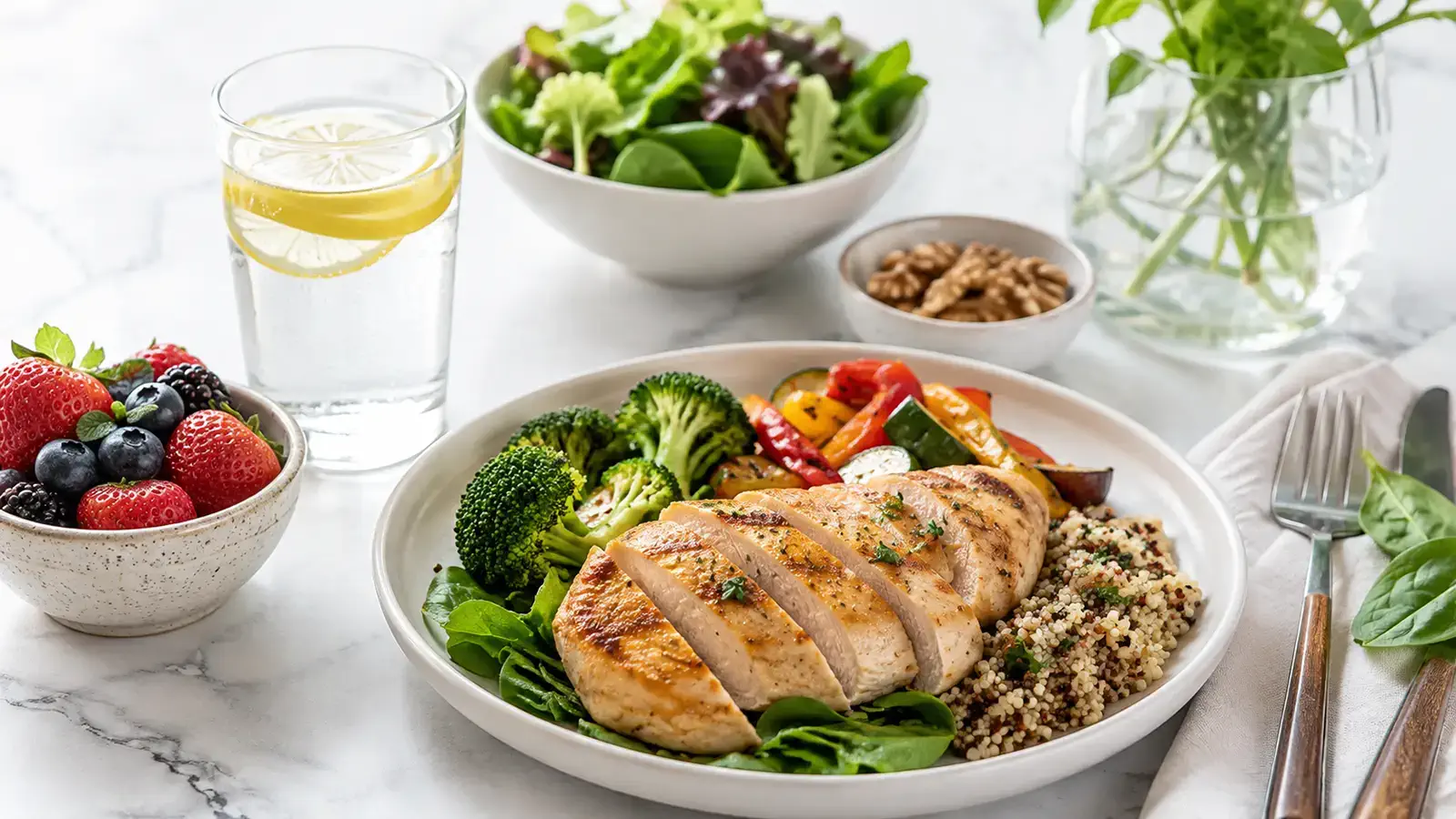
Breakfast might be eggs with a small portion of fruit, or Greek yogurt with berries. Lunch could be grilled chicken or tuna with vegetables in a low-calorie wrap. Dinner might be fish or chicken with roasted vegetables and a modest portion of a starch if it fits the plan. A protein-rich snack can help on days when meals are unusually small.
The exact menu matters less than the pattern: protein is protected, portions remain controlled, and most calories come from foods that provide real nutritional value.
Do Not Let Low Appetite Become Undernutrition
Some patients become so uninterested in food that they routinely skip meals and fall short on protein, vitamins and minerals. The 2025 joint advisory from the American College of Lifestyle Medicine, American Society for Nutrition, Obesity Medicine Association and The Obesity Society specifically warns about nutrient inadequacy and loss of muscle and bone during GLP-1 treatment.
Weight loss is not improved by becoming nutritionally depleted. If intake is very low for more than a brief period, the medication dose, food plan and possible supplementation should be reviewed.
From Dr. Lipman’s Practice
The practical rule I give patients is to eat the food you most need first. On a GLP-1, that is usually protein. When appetite is low, waiting until the end of the meal for chicken, fish, eggs or yogurt often means the patient never gets to it.
I also watch the foods that look healthy but can quietly stop weight loss. Nuts, nut butters, olive oil, avocado, dressings and restaurant portions can add a surprising number of calories. These foods are not bad, but they still count.
The Best GLP-1 Diet Is the One That Supports the Medication
A GLP-1 medication reduces appetite. A good food plan uses that advantage without sacrificing nutrition. Prioritize protein, keep meals smaller, build most meals around minimally processed foods, and adjust fat, fiber and meal size according to your tolerance.
If your weight loss slows, side effects increase or you are struggling to eat enough protein, the answer may be an adjustment in the plan rather than simply eating less.
Dr. Lipman’s GLP-1 Weight Loss Program combines medication with individualized nutrition, dose management and long-term maintenance rather than leaving patients to figure out the diet on their own.