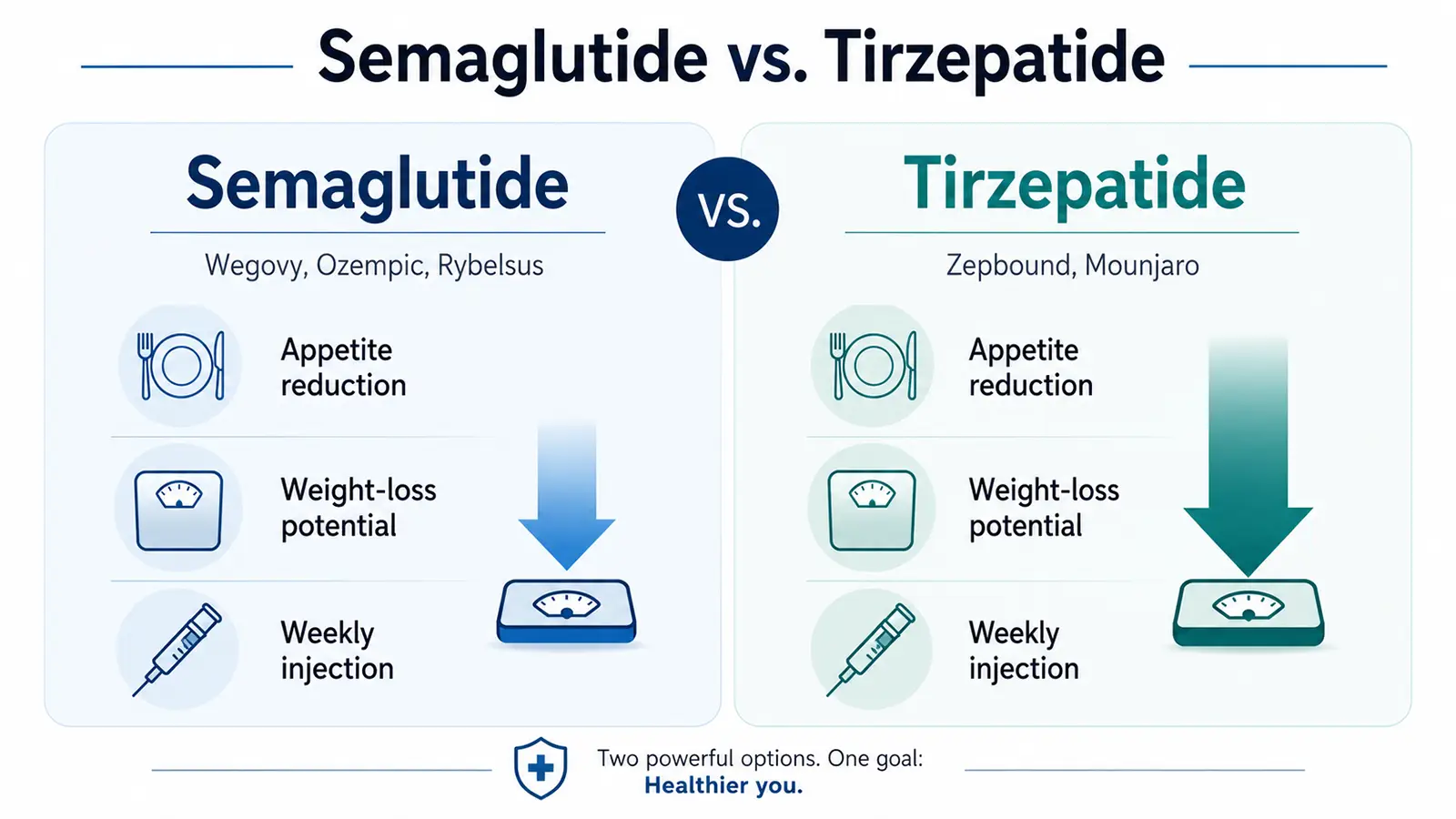
If your main goal is maximum weight loss, tirzepatide currently has the edge over semaglutide. In the first major head-to-head obesity trial, adults taking tirzepatide lost an average of 20.2% of their starting weight at 72 weeks, compared with 13.7% with semaglutide. That does not mean tirzepatide is automatically the right medication for every patient. Tolerability, medical history, cost, access, prior response and the ability to stay on treatment are all key factors.
Both medications can produce substantial weight loss when used appropriately. Semaglutide has a longer track record and extensive outcome data. Tirzepatide acts on two incretin pathways instead of one and, on average, produces greater weight reduction. The practical question is not simply which drug wins a trial. It is which treatment gives a particular patient the best combination of weight loss, tolerability and long-term adherence.
Semaglutide and Tirzepatide Are Related, but They Are Not the Same Drug
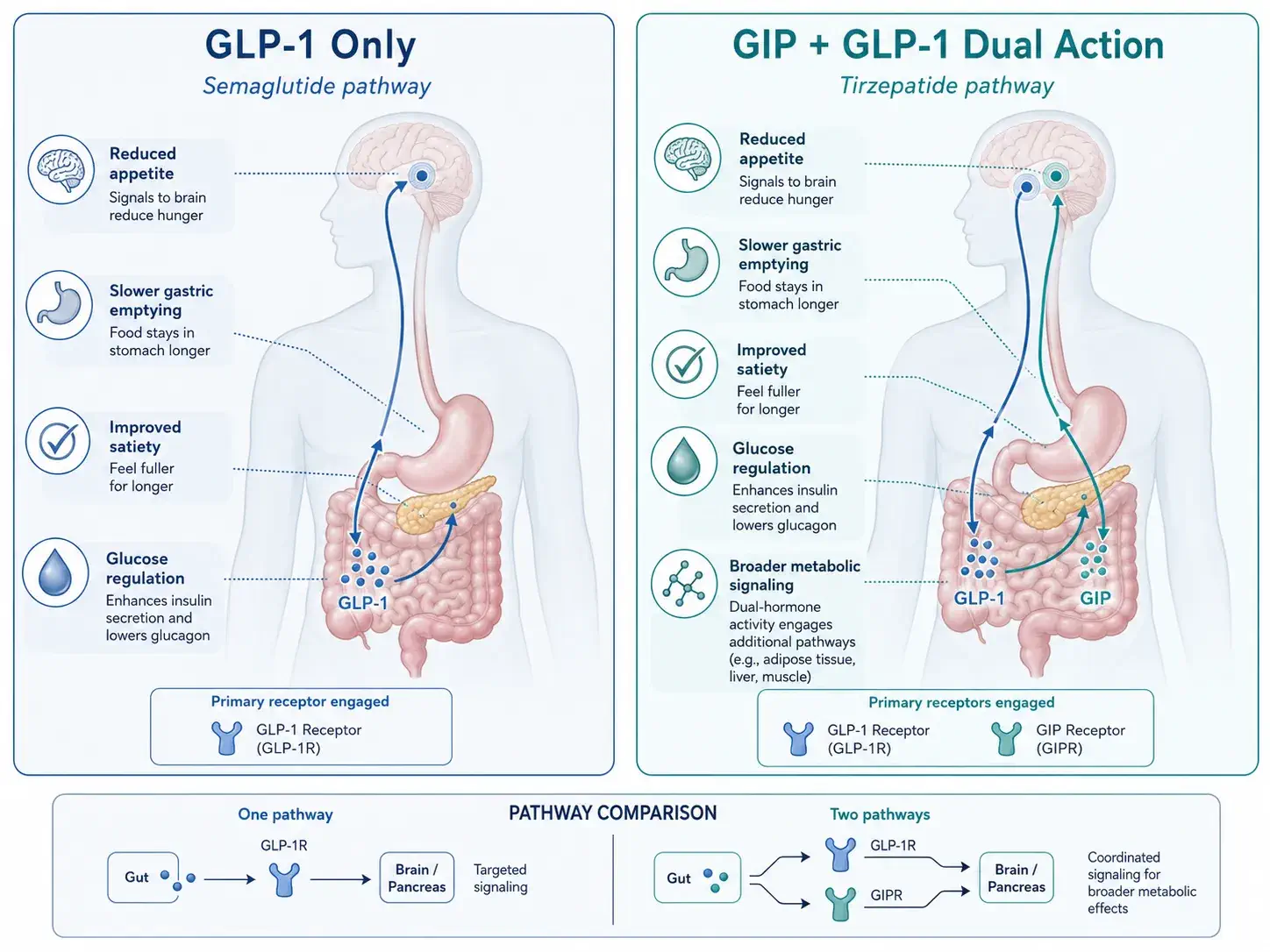
Semaglutide is a GLP-1 receptor agonist. It mimics the action of glucagon-like peptide-1, an incretin hormone involved in appetite regulation, insulin secretion and glucose control. For weight management, semaglutide is sold as Wegovy. Ozempic contains the same active ingredient but is approved primarily for type 2 diabetes, with additional cardiovascular and kidney-related indications in appropriate patients.
Tirzepatide activates both GLP-1 and GIP receptors. GIP stands for glucose-dependent insulinotropic polypeptide. The dual mechanism appears to add to the weight-loss effect seen with GLP-1 receptor activation alone. Tirzepatide is sold as Zepbound for chronic weight management and as Mounjaro for type 2 diabetes.
Which Produces More Weight Loss?
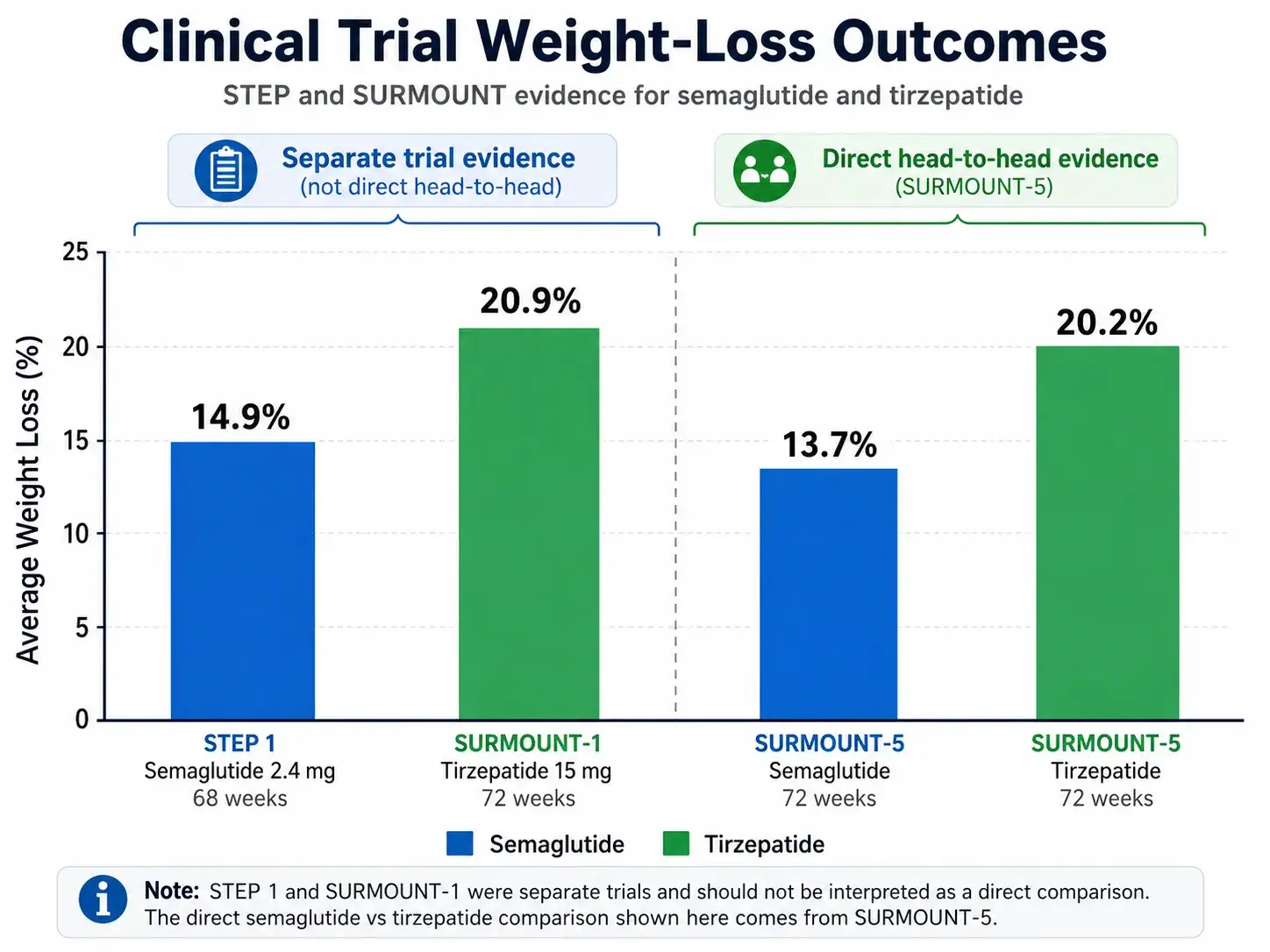
The best direct comparison comes from the SURMOUNT-5 trial, published in The New England Journal of Medicine in 2025. The trial enrolled 751 adults with obesity who did not have diabetes. Participants received the maximum tolerated dose of tirzepatide or semaglutide for 72 weeks.
- Average weight loss with tirzepatide: 20.2% of starting body weight.
- Average weight loss with semaglutide: 13.7% of starting body weight.
- Tirzepatide also produced a larger average reduction in waist circumference.
- More tirzepatide-treated participants reached weight-loss thresholds of 10%, 15%, 20% and 25%.
Earlier placebo-controlled trials point in the same direction. In STEP 1, semaglutide 2.4 mg produced about 14.9% average weight loss at 68 weeks. In SURMOUNT-1, tirzepatide produced average losses of 15.0%, 19.5% and 20.9% at 5 mg, 10 mg and 15 mg, respectively, at 72 weeks.
These are study averages, not guarantees. Some people lose considerably more and others much less. Starting weight, dose, treatment duration, nutrition, activity, other medications and individual biology all affect the result.
Does Tirzepatide Work Faster?
Both medications begin affecting appetite and food intake early in treatment, but the full weight-loss effect develops over many months as doses are gradually increased. It is usually more useful to judge the trend over several months than to compare the first few weeks.
A faster early response is not always better if side effects force repeated interruptions. A treatment that a patient can tolerate consistently often produces a better real-world result than a theoretically stronger medication that cannot be maintained.
What About Side Effects?
The side-effect profiles overlap substantially. Nausea, diarrhea, vomiting, constipation, abdominal discomfort, indigestion and reflux are among the most common problems. These effects are usually most noticeable during the beginning of treatment or after dose increases.
In SURMOUNT-5, gastrointestinal problems were the most common adverse events with both medications and were generally mild to moderate. The study was not designed to prove that one drug is universally easier to tolerate. Individual responses vary enough that a patient who struggles with semaglutide may do better on tirzepatide, and the reverse can also occur.
The way the medication is prescribed matters. Gradual titration, smaller meals, avoiding heavy or greasy foods when symptoms are active, and pausing dose escalation when necessary can make a major difference.
When Semaglutide May Still Be the Better Choice
Greater average weight loss does not make semaglutide obsolete. Semaglutide has extensive clinical experience behind it, and Wegovy has an FDA indication for reducing major cardiovascular events in certain adults with cardiovascular disease and overweight or obesity. Semaglutide may also be preferred when a patient has already responded well to it, tolerates it comfortably or has better insurance coverage or access.
The availability of oral Wegovy adds another consideration for patients who prefer a tablet rather than a weekly injection. Medication choice should be based on the whole patient, not a single percentage from a trial.
When Tirzepatide May Be the Better Choice
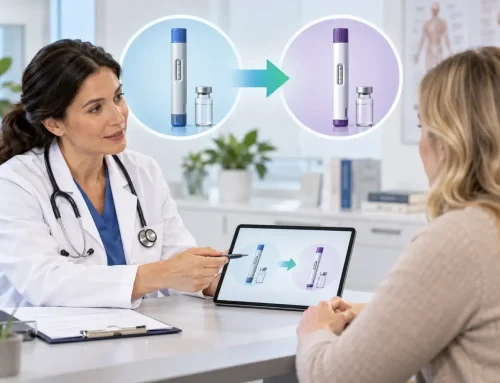
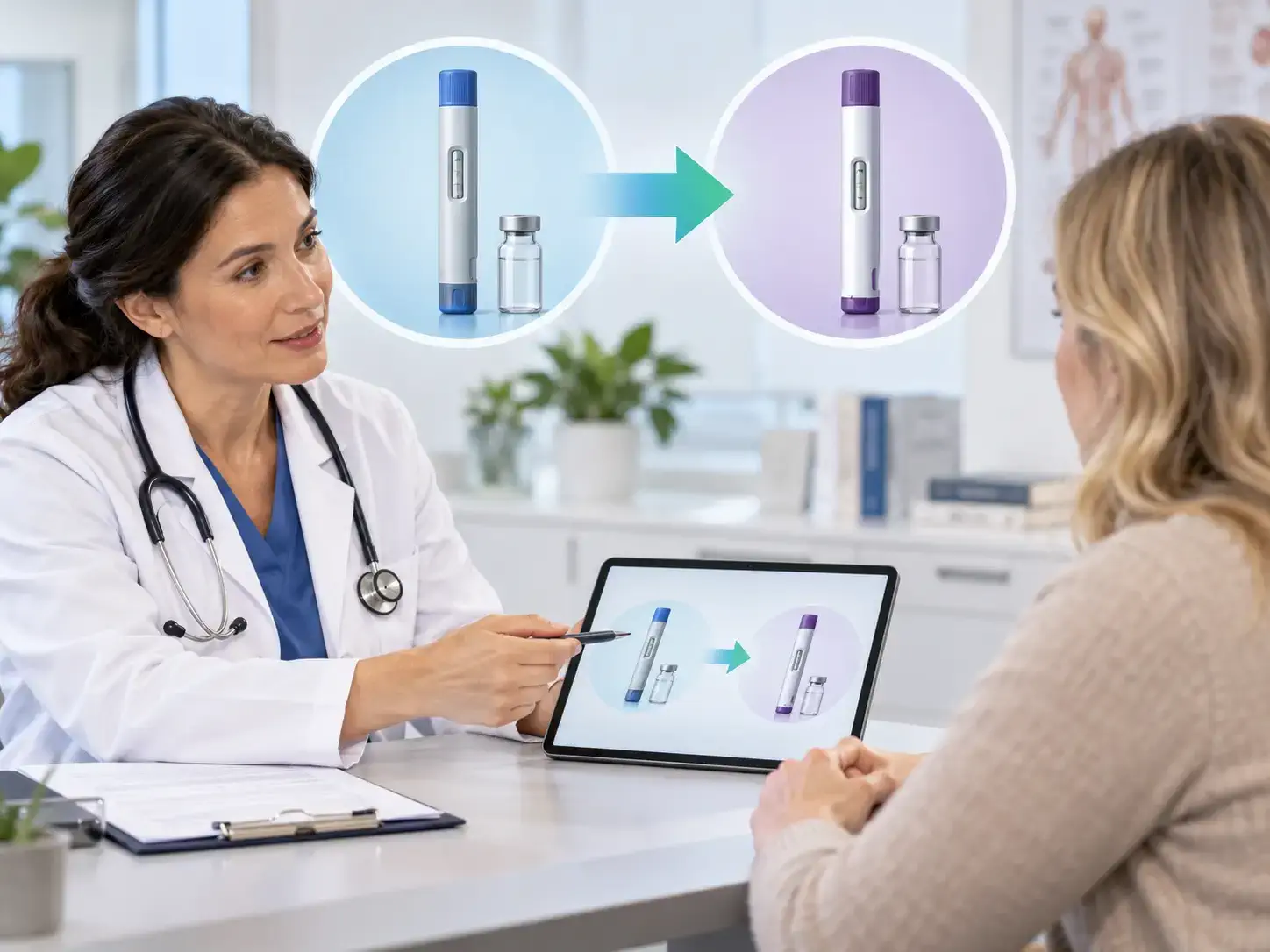
Tirzepatide is especially compelling when the priority is greater average weight reduction and the patient is an appropriate candidate. Zepbound also has an FDA indication for moderate to severe obstructive sleep apnea in adults with obesity. A patient who has lost some weight on semaglutide but then reaches a persistent plateau may also be evaluated for a switch to tirzepatide rather than simply pushing a medication that is no longer producing the desired response.
From Dr. Lipman’s Practice
I do not choose a GLP-1 medication by asking which one has the highest maximum dose. The goal is to find the medication and dose that controls appetite and food noise, produces steady weight loss and remains tolerable enough for the patient to stay with the plan.
Some patients respond very well at lower doses. Others need gradual increases over time. I also pay close attention to protein intake, overall calories, side effects and plateaus because medication alone does not answer every problem that comes up during a major weight loss.
So, Which One Should You Choose?
If the question is strictly which medication produces more weight loss on average, the current evidence favors tirzepatide. If the question is which medication is best for you, the answer requires more information.
A physician should consider your medical history, current medications, previous GLP-1 use, side effects, weight-loss goals, diabetes status, cardiovascular risk, access and cost before recommending semaglutide or tirzepatide. The best medication is the one that produces meaningful weight loss safely and can be integrated into a plan you can maintain.
If you are considering semaglutide, tirzepatide or another GLP-1 treatment, learn more about Dr. Lipman’s physician-supervised GLP-1 Weight Loss Program in Miami and how medication selection, dosing, nutrition and maintenance are individualized.
Semaglutide vs. Tirzepatide at a Glance
| Semaglutide | Tirzepatide | |
|---|---|---|
| Major brand names | Wegovy for weight loss; Ozempic and Rybelsus primarily for type 2 diabetes | Zepbound for weight loss; Mounjaro primarily for type 2 diabetes |
| Weight-loss dosing | Wegovy injection starts at 0.25 mg weekly and is gradually increased. Usual maintenance is 1.7 or 2.4 mg weekly; selected adults may increase to 7.2 mg weekly. Oral Wegovy is also available with a 25 mg daily maintenance dose. | Zepbound starts at 2.5 mg weekly, then increases in 2.5 mg steps as needed and tolerated. Weight-loss maintenance doses are 5, 10 or 15 mg weekly. |
| Average weight loss | 13.7% at 72 weeks in the SURMOUNT-5 head-to-head trial | 20.2% at 72 weeks in the same head-to-head trial |
| Common side effects | Nausea, diarrhea, vomiting, constipation, abdominal discomfort, indigestion and reflux | Nausea, diarrhea, vomiting, constipation, abdominal discomfort, indigestion and injection-site reactions |
| Cost & access | Brand-name Wegovy can be expensive without coverage. Manufacturer self-pay programs can reduce the cash price, but insurance coverage varies considerably. Compounded semaglutide may provide a lower-cost option when medically and legally appropriate. | Brand-name Zepbound can also be expensive without coverage, although Lilly offers direct-pay and savings programs. Compounded tirzepatide may provide a lower-cost option when medically and legally appropriate. |
| Bottom line | Highly effective, extensive clinical experience, and now available in both injectable and oral weight-loss formulations | Produces greater average weight loss in current head-to-head evidence and may be particularly useful when greater weight reduction is the priority |