What Are Keto Macros?
If you’ve spent any time reading about the ketogenic diet, you’ve probably come across the term “macros.” Short for macronutrients, macros are simply the three nutrients that provide your body with energy:
- Carbohydrates
- Protein
- Fat
Following a ketogenic diet isn’t simply about eating fewer carbohydrates. Understanding how carbohydrates, protein, and fat work together can help you make better food choices and avoid many of the common mistakes people make when starting a ketogenic diet.
You don’t need to become a mathematician to understand keto macros. Once you know the role each macronutrient plays, making good food choices becomes much easier.
The Three Macronutrients
Carbohydrates
Carbohydrates have the greatest influence on whether you remain in ketosis. When carbohydrate intake is kept low enough, your body shifts from relying primarily on glucose for energy to using fat and ketones as its primary fuel source. On average, that means limiting net carbohydrates to approximately 20 to 30 grams per day, although individual needs can vary.
Because carbohydrates have the greatest impact on ketosis, they’re usually the first macronutrient people focus on when starting a ketogenic diet.
Protein
Protein is essential for maintaining muscle, supporting your immune system, healing tissues, and countless other functions throughout the body.
The ketogenic diet is often misunderstood as either a high-protein diet or one where protein must be kept to an absolute minimum to maintain ketosis. Neither is accurate. A ketogenic diet should provide adequate protein to preserve lean muscle and support good health while keeping carbohydrate intake low.
Fat
Fat becomes your primary dietary source of energy on a ketogenic diet. It also promotes satiety, supports hormone production, and helps absorb fat-soluble vitamins. The amount of fat you eat should be individualized based on your health goals, which I discuss in more detail in How Much Fat Should You Eat on a Keto Diet?
What Are Typical Keto Macro Ratios?
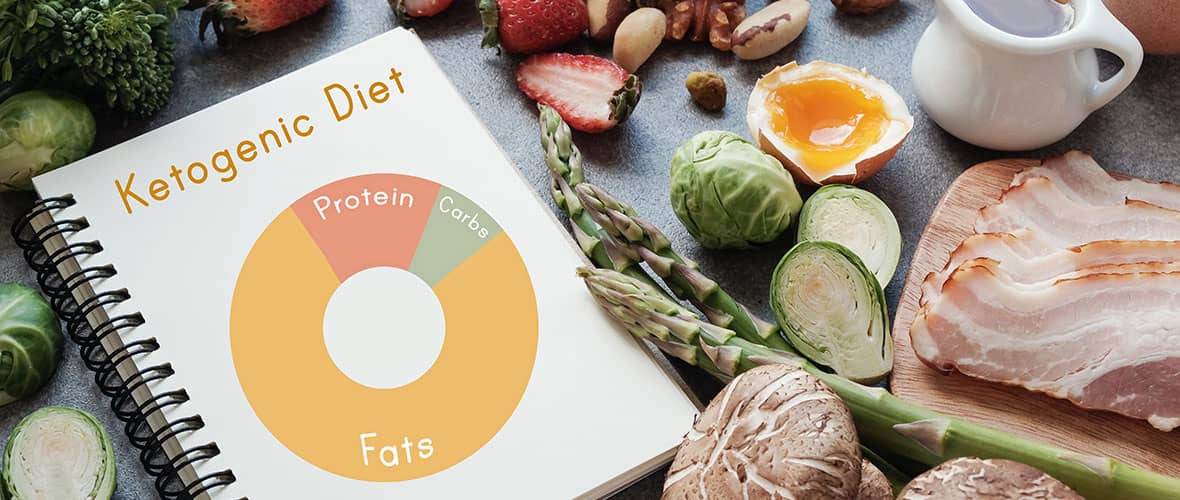
Although ketogenic diets can be individualized, most fall within a similar range of macronutrient intake.
| Macronutrient | Typical Keto Range |
|---|---|
| Carbohydrates | 5–10% of daily calories |
| Protein | 20–30% of daily calories |
| Fat | 60–75% of daily calories |
These percentages are useful as a general framework, not as rigid rules. Your ideal macronutrient intake depends on factors such as your age, activity level, medical conditions, medications, body composition, and weight-loss goals. Two people following the same ketogenic diet may have different macro targets and still achieve excellent results.
For the majority of people following a ketogenic diet, consistently eating nutritious, whole foods within an appropriate carbohydrate range is far more important than trying to hit a specific percentage every day.
Do You Need to Count Macros?
While tracking macros can be a useful learning tool when you’re starting out, for most people, the answer is no.
If you’re just starting a ketogenic diet, tracking your carbohydrate intake for a few weeks can help you understand how different foods fit into your daily goals. It can also make it easier to identify foods that contain more carbohydrates than you expected. Once you’ve developed those habits, many people find they no longer need to measure or track every meal. They naturally begin choosing foods that fit their ketogenic eating pattern.
Macro tracking can also be helpful if you’ve reached a weight-loss plateau, have very specific performance goals, or are following a therapeutic ketogenic diet under medical supervision. The goal isn’t to achieve perfect macro percentages. The goal is to consistently follow a well-formulated ketogenic diet that you can maintain over the long term.
From Dr. Lipman’s Practice
Patients often ask whether they should track every gram of fat, protein, and carbohydrate indefinitely. My answer is usually no.
Tracking macros can be extremely helpful while you’re learning how to follow a ketogenic diet because it teaches you how different foods fit into your daily goals. Over time, however, people become familiar with the foods they eat regularly and spend much less time measuring and calculating.
The patients who achieve the best long-term results aren’t usually the ones with the most detailed spreadsheets. They’re the ones who’ve developed eating habits they can maintain for years.
The Most Common Keto Macro Mistakes
Once you understand the basics, success usually comes down to avoiding a few common mistakes.
Eating Too Many Carbohydrates
This is by far the most common problem. Many people eliminate obvious sources of carbohydrates like bread, pasta, rice, and desserts but underestimate how quickly carbohydrates can add up from sauces, beverages, packaged foods, and oversized portions.
That’s why I encourage patients to pay close attention to net carbohydrates, especially during the first few weeks of the diet. Once you become familiar with the foods you eat regularly, staying within your carbohydrate goal becomes much easier.
Not Eating Enough Protein
Another common misunderstanding is that protein should be kept as low as possible to maintain ketosis. That’s typically unnecessary. Consistently eating too little protein can make it more difficult to preserve lean muscle during weight loss and may leave you feeling less satisfied after meals. Over time, inadequate protein intake can also make it harder to maintain strength and support normal body function. The right approach is simply to eat enough protein to support good health while continuing to keep carbohydrates low.
Eating Too Much Fat
Eating more fat doesn’t automatically lead to greater weight loss.
Fat is an important part of a ketogenic diet because it helps keep you satisfied and provides energy when carbohydrates are restricted. But if your goal is weight loss, your body also needs to draw on its own fat stores for energy. Adding large amounts of butter, heavy cream, oils, and “fat bombs” simply because they’re keto-friendly may slow your progress if you’re consuming more calories than your body needs.
A successful ketogenic diet isn’t about eating as much fat as possible. It’s about eating enough healthy fat to satisfy your appetite while allowing your body to burn stored fat for fuel.
Chasing Perfect Macro Ratios
Some people become so focused on hitting an exact percentage of fat, protein, and carbohydrates that they lose sight of the bigger picture. The difference between 68% and 72% of calories from fat is unlikely to determine whether you’re successful on a ketogenic diet. Consistency matters far more than perfection. If you’re eating mostly whole, minimally processed foods, keeping carbohydrates appropriately low, and consuming adequate protein, you’re already doing the things that matter most.
Related Articles
Ready to Simplify Your Keto Diet?
Understanding keto macros doesn’t have to be complicated. Once you learn the role of carbohydrates, protein, and fat, making healthy food choices becomes much more straightforward.
If you’re looking for a ketogenic diet plan that’s tailored to your health, medications, and weight-loss goals, Dr. Richard Lipman’s medically supervised Keto Diet Program provides personalized guidance to help you lose weight safely, improve your health, and build habits you can maintain for the long term.