
Nutrition labels can make following a ketogenic diet much easier, but only if you know which numbers are truly important.
You don’t need to analyze every vitamin, mineral, number, and percentage on the package. For most people following keto for weight loss, a handful of items deserve most of your attention: serving size, total carbohydrates, dietary fiber, sugars, protein, fat, calories, and the ingredient list.
Learning how these pieces fit together allows you to quickly answer the key question: Does this food fit into my diet, and how much of it can I eat?
What Should You Look for on a Nutrition Label?
When evaluating a packaged food for a ketogenic diet, I recommend looking at the label in roughly this order:
- Serving size
- Total carbohydrates
- Dietary fiber
- Total and added sugars
- Protein
- Fat and calories
- Ingredient list
You won’t necessarily need to scrutinize every one of these numbers every time you buy something. A carton of eggs doesn’t require much investigation. A packaged snack advertising itself as “keto-friendly” deserves a closer look. The important thing is to evaluate the actual nutrition information, rather than making your decision based on claims printed on the front of the package.
Start With Serving Size
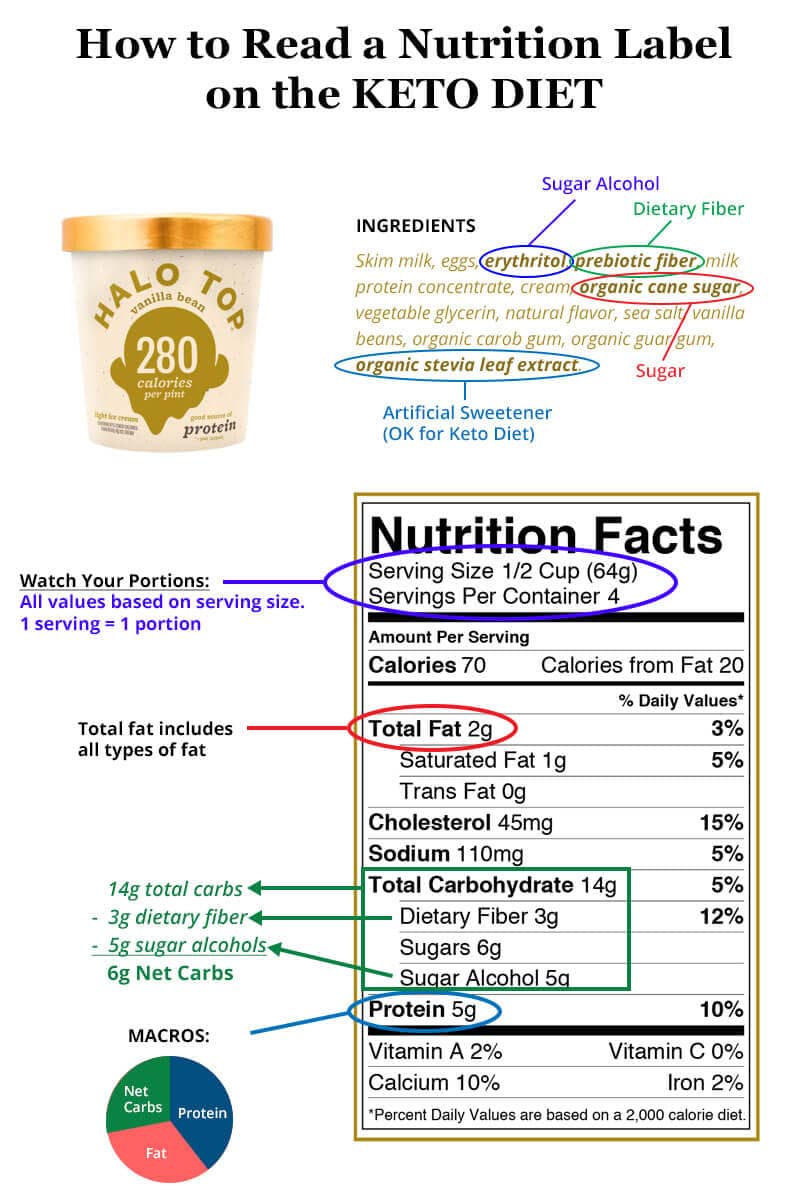
Before looking at carbohydrates, calories, or anything else, check the serving size. Every number on the Nutrition Facts label is based on that amount of food. If the label lists 4 grams of carbohydrates and 150 calories per serving, but you eat three servings, you’ve actually consumed 12 grams of carbohydrates and 450 calories.
Also look at servings per container. A package that appears to be a single snack may contain two or more servings. This matters on a ketogenic diet because your daily carbohydrate allowance is relatively small. A food that fits easily into your diet at one serving may look very different at two or three. Don’t assume the serving size on the label is the amount you normally eat. Compare the two.
Total Carbohydrates: Find This Number Before Looking at Sugar
After serving size, find Total Carbohydrates on the Nutrition Facts label. This number includes several types of carbohydrates, including sugars, starches, and dietary fiber. That’s important because looking only at the line labeled Total Sugars can give you the wrong impression about a food.
A product can contain very little sugar and still contain a substantial amount of carbohydrate from starch. For example, crackers, tortillas, breads, and many packaged snacks may not taste particularly sweet, but the flour or starch used to make them still contributes carbohydrates. Low sugar does not automatically mean low carb.
On the Keto diet, Total Carbohydrates gives you the starting point for determining how much of the food can fit within your daily carbohydrate limit.
Dietary Fiber and Net Carbohydrates
Dietary fiber is included in the Total Carbohydrate number, but most fiber is not digested and absorbed in the same way as sugars and starches. That’s why many ketogenic diets focus on net carbohydrates rather than total carbohydrates alone. The basic calculation is:
Net Carbs = Total Carbohydrates − Dietary Fiber
If a serving contains:
- 12 grams total carbohydrate
- 5 grams dietary fiber
it contains 7 grams of net carbohydrates before considering any applicable sugar alcohols. You don’t need to relearn the entire calculation every time you read a label. Once you’re familiar with it, the subtraction takes only a few seconds.
Sugar alcohols can make the calculation more complicated because they aren’t all metabolized the same way. I cover that separately in How to Calculate Net Carbs on a Keto Diet, including when you should and shouldn’t subtract them.
Total Sugars and Added Sugars Are Not the Same Thing
Nutrition Facts labels list Total Sugars and, underneath it, Added Sugars. Total Sugars includes sugars naturally present in the food as well as sugars added during processing. Added Sugars tells you how much sugar was added by the manufacturer. That distinction can be useful when comparing foods, but neither number should be considered by itself when deciding whether something fits a ketogenic diet.
For example, plain dairy products can contain naturally occurring lactose even when no sugar has been added. Conversely, a product with 0 grams of added sugar can still contain carbohydrates from naturally occurring sugars or starches. As a basic general rule:
Don’t use the sugar number as a substitute for the Total Carbohydrate line.
For keto, Total Carbohydrates remains the starting point. The sugar information helps you understand where some of those carbohydrates are coming from.
Read the Ingredient List Too
The Nutrition Facts panel tells you how much carbohydrate, protein, fat, and other nutrients a food contains. The ingredient list tells you what you’re actually eating. Ingredients are listed in descending order by weight, so the first few ingredients generally make up the largest portion of the product.
Added sugars can appear under many different names, including cane sugar, corn syrup, dextrose, fructose, honey, maple syrup, and fruit juice concentrates. Starches such as corn starch, potato starch, rice flour, and tapioca starch can also add carbohydrates even though the food may not taste sweet.
You don’t need to memorize every possible name for sugar or starch. If you’re unsure about an ingredient, the carbohydrate information on the Nutrition Facts panel still tells you how much carbohydrate is in a serving.
The ingredient list is also useful for evaluating the overall quality of a food. Two products may have similar carbohydrate counts but very different ingredients. Whenever possible, I recommend choosing foods made from recognizable, minimally processed ingredients rather than trying to build a ketogenic diet around highly processed substitutes.
What Do “Sugar-Free,” “No Added Sugar,” “Low Carb,” and “Keto-Friendly” Really Mean?
Front-of-package claims can be useful, but they can also be misunderstood.
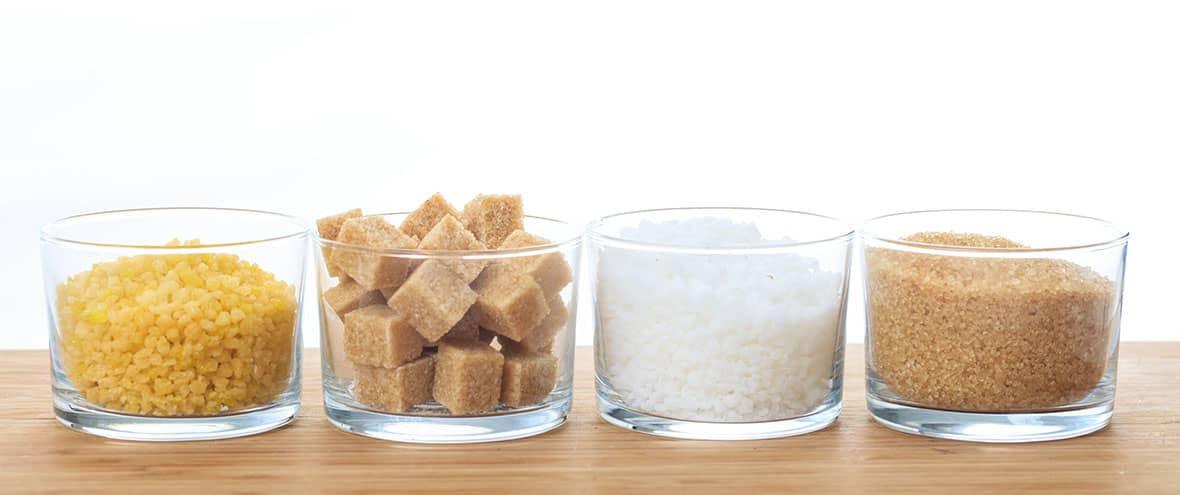
- “Sugar-free” does not mean carbohydrate-free. Under FDA labeling rules, “sugar-free” refers specifically to the amount of sugar in a serving. The product may still contain starches, fiber, sugar alcohols, or other sources of carbohydrate.
- “No added sugar” does not mean sugar-free. It means sugars weren’t added during processing. A food can still contain naturally occurring sugars and carbohydrates.
- “Low carb” and “keto-friendly” require more caution. Unlike established FDA nutrient-content claims such as “sugar-free,” there is no standardized FDA definition that determines whether a food can be marketed as “keto” or “keto-friendly.”
This is why I don’t recommend deciding whether to buy a food based on the largest words on the package. Turn it over and look at the numbers yourself.
Make Sure You’re Getting Enough Protein
Carbohydrates get most of the attention on keto, but protein deserves a look as well. Protein helps preserve lean muscle during weight loss and is essential for maintaining strength and normal body function. A ketogenic diet should provide adequate protein rather than simply minimizing carbohydrates and adding fat.
The protein line on the Nutrition Facts panel makes it easy to compare similar foods. If you’re choosing between two yogurts, protein bars, frozen meals, or other packaged foods with similar carbohydrate counts, the amount of protein may help you decide which better fits your eating plan.
A food being low in carbohydrates doesn’t automatically make it a good source of protein. Butter and oils, for example, contain very little or no carbohydrate, but they provide essentially no protein either.
Your total protein needs depend on factors such as body size, age, activity level, health, and weight-loss goals. I cover those considerations in more detail in Keto Macros Explained: How Much Fat, Protein, and Carbs Do You Need?
Don’t Ignore Fat and Calories Just Because a Food Is Keto-Friendly
A food can contain very few carbohydrates and still provide a large number of calories. Fat contains approximately 9 calories per gram, compared with about 4 calories per gram for carbohydrates and protein. Foods such as cheese, nuts, oils, butter, cream, and many packaged keto snacks can therefore pack a lot of calories into relatively small portions.
That doesn’t make high-fat foods unhealthy or inappropriate for keto. Fat provides energy, helps with satiety, and is an important part of a ketogenic diet. But if you’re following keto to lose weight, low carb does not mean unlimited. Look at the calories and fat per serving, particularly with foods that are easy to eat in large quantities. If a small package contains several servings, those calories can accumulate quickly even when the net carbohydrate count remains low.
The objective is not to choose the lowest-calorie food on the shelf. It’s to understand what you’re eating and choose portions that fit both your ketogenic diet and your weight-loss goals.
Putting It All Together: A Practical Example
Suppose you’re considering a packaged snack that advertises “3g Net Carbs” on the front. Before deciding whether it fits your diet, turn the package over. Start with the serving size. If the bag contains two servings and you expect to eat the entire bag, all of the numbers on the label need to be doubled.
Next, check Total Carbohydrate and Dietary Fiber to see whether the advertised net carbohydrate count makes sense. Look at Total Sugars and Added Sugars for additional information about where those carbohydrates come from.
Then check the protein, fat, and calories. A snack may be low in carbohydrates but provide little protein and several hundred calories once you account for the amount you’re actually going to eat.
Finally, scan the ingredient list. That gives you some context about the quality of the food and how heavily processed it is.
By the time you’ve done those checks, you can answer a much more useful question than simply asking whether the package says “keto”:
Does this food fit my diet, and is the portion I’m likely to eat appropriate for my goals?
From Dr. Lipman’s Practice
When I teach patients to read nutrition labels, I don’t expect them to stand in the grocery store analyzing every number on every package.
I want them to know which numbers matter for their goals.
Start with the serving size and carbohydrates. Look at protein, fat, and calories in the context of the rest of your diet. Check the ingredients when you’re comparing packaged foods or trying something unfamiliar. After you’ve done this for a while, it gets much faster. You’ll recognize the foods you buy regularly, know which products work for you, and only need to take a closer look when something is new.
The Nutrition Facts label is a tool. Use it to make better decisions, not to make eating more complicated.
A Simple Keto Nutrition Label Checklist
When you’re evaluating a packaged food, ask yourself:
- What is the serving size? Is that close to the amount I’m actually going to eat?
- How many total carbohydrates are in a serving?
- How much dietary fiber does it contain? What does that make the net carbohydrate count?
- How much total and added sugar does it contain?
- How much protein am I getting?
- How much fat and how many calories are in the portion I’ll actually eat?
- What’s in the ingredient list?
- Am I evaluating the food itself, or am I being persuaded by claims on the front of the package?
You don’t need every food to be perfect. You need enough information to decide whether it fits into the rest of your diet.
Common Nutrition Label Mistakes on Keto
Once you know what to look for, reading a Nutrition Facts label becomes fairly simple. Most problems come from focusing on one number while overlooking the rest of the information.
Looking Only at Sugar
A food doesn’t need to contain much sugar to be high in carbohydrates. Starches from flour, grains, potatoes, and other ingredients also contribute to Total Carbohydrate. Start with Total Carbohydrate, not Total Sugars.
Assuming “Zero Sugar” Means Zero Carbs
A sugar-free product can still contain carbohydrates from starches, fiber, sugar alcohols, or other ingredients. If the package says “zero sugar,” check the Total Carbohydrate line before deciding whether it fits your diet.
Assuming Low Net Carbs Means You Can Eat as Much as You Want
Net carbohydrates are calculated per serving. A product containing 3 grams of net carbs per serving contains 9 grams if you eat three servings. The calories, fat, and other nutrients increase along with it.
Ignoring Calories Because the Food Is Keto-Friendly
Ketosis doesn’t eliminate the importance of energy balance. If weight loss is your goal, routinely eating more calories than your body needs can slow your progress even when your carbohydrate intake remains low.
Assuming “Keto” Means Healthy
A product can meet your carbohydrate target without being particularly nutritious. Food quality still matters. Vegetables, eggs, meat, seafood, avocados, nuts, seeds, olive oil, and other minimally processed foods provide nutrients that a highly processed keto snack may not. “Keto-friendly” tells you something about how a product is being marketed. It doesn’t tell you everything you need to know about the food.
Related Articles
Ready to Put It Into Practice?
Reading nutrition labels is a useful skill, but the numbers on a package are only one part of a successful ketogenic diet. Your food choices also need to fit your health, medications, nutritional needs, and weight-loss goals.
Dr. Richard Lipman’s medically supervised Keto Diet Program takes those factors into account to develop an individualized approach to weight loss that you can realistically follow.